
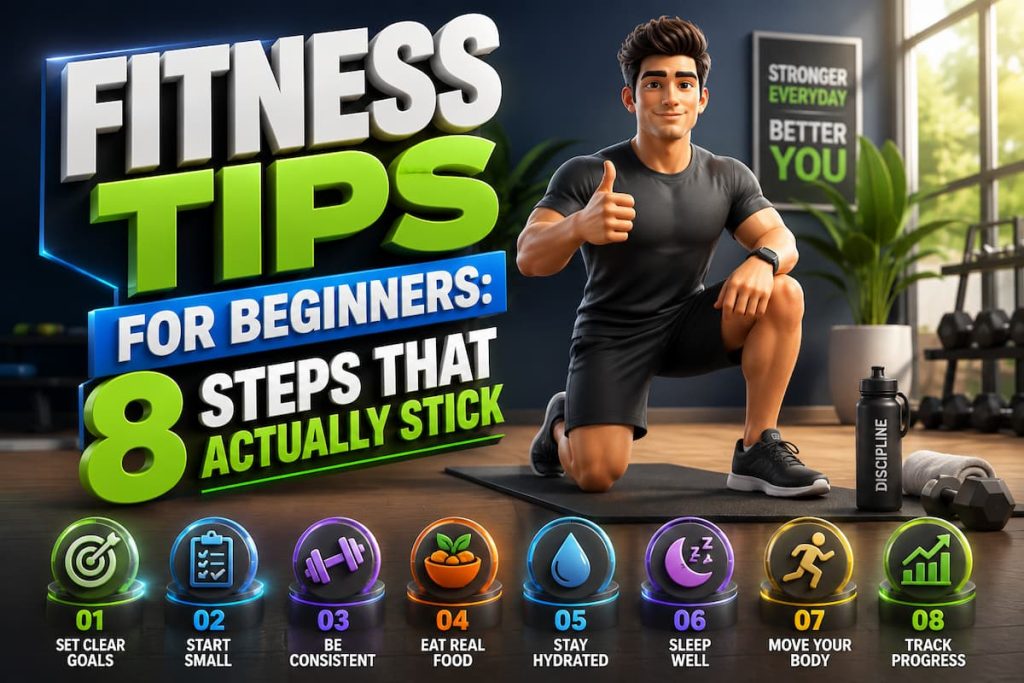
Starting out is the hardest part — not because the exercises are hard, but because there’s so much conflicting advice that it’s easy to freeze before you even begin. Six-day splits, fasted cardio, supplement stacks — none of that matters yet. What actually matters when you’re starting from zero is much simpler, and that’s exactly what these fitness tips for beginners cover.
No jargon, no 5 AM gym-bro routine required. Just eight things that make the difference between quitting in week two and still going six months from now.
1. Start With Less Than You Think You Need
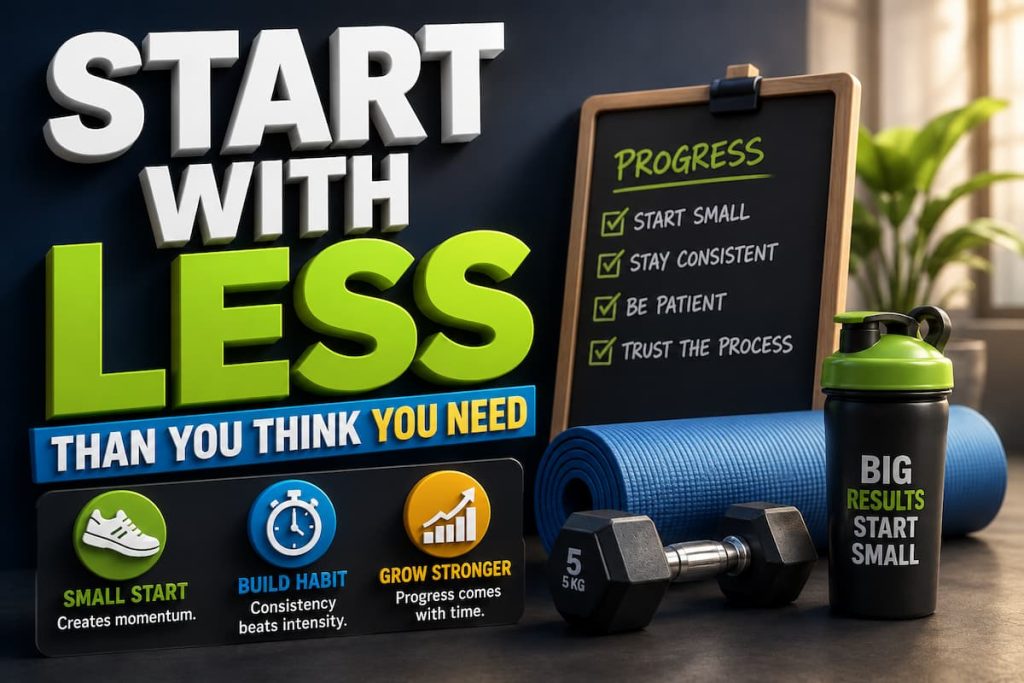
The most common beginner mistake isn’t laziness — it’s doing too much, too fast. This is probably the single most important of all fitness tips for beginners, because it’s the one most people ignore in week one. Going from zero activity to daily hour-long sessions almost guarantees burnout or injury within a few weeks. Official guidance backs this up: the CDC recommends adults aim for 150 minutes of moderate-intensity activity per week, which works out to roughly 30 minutes, five days a week — not an hour of daily punishment. Starting below that and building up is far more sustainable than starting above it and crashing.
2. Pick a Format You Won’t Dread
Home workouts, walking, gym sessions, swimming, group classes — the “best” format is whichever one you’ll actually repeat. If the idea of a crowded gym makes you anxious, a structured no-equipment home workout removes that barrier completely and works just as well when you’re starting out.
3. Expect Muscle Soreness — But Know the Difference
A day or two after your first few sessions, you’ll likely feel sore, sometimes surprisingly so. This is called DOMS (delayed onset muscle soreness), and it’s a completely normal part of your muscles adapting — not a sign that something went wrong. According to the Cleveland Clinic, DOMS typically starts one to three days after unfamiliar or intense exercise and fades on its own within about a week. Sharp, joint-level pain is different and worth paying attention to — general muscle ache is not.
4. Low-Impact Doesn’t Mean Low-Result
If joints, weight, or past injuries make high-impact workouts intimidating, that’s not a reason to skip exercise altogether. Low-impact exercises — think cycling, swimming, or bodyweight strength work — build real fitness without the pounding, and they’re often a smarter starting point than jumping straight into high-intensity training.
5. Rest Days Aren’t Optional
New enthusiasm makes it tempting to train every single day. But your muscles actually rebuild and get stronger during rest, not during the workout itself. Among all the fitness tips for beginners on this list, this is the one that feels the most counterintuitive — more isn’t always better. Skipping rest days regularly is one of the fastest ways beginners burn out or get hurt in the first month.
6. Fuel the Effort, Don’t Undercut It
Exercising while under-eating, especially protein, makes recovery slower and results less noticeable. You don’t need a strict diet plan to start — just make sure meals aren’t working against the effort you’re putting into workouts. Pairing training with sustainable daily habits rather than extreme dieting tends to produce far more consistent results than an all-or-nothing approach.
7. Track Something Simple
You don’t need a spreadsheet. Tracking something as basic as “workouts completed this week” or “minutes walked today” gives you a concrete signal of progress — one of the simplest fitness tips for beginners to actually stick with, since it takes seconds and needs no app.
8. Give It More Than a Few Weeks
The biggest reason beginners quit isn’t lack of results — it’s quitting before results have time to show up. Behavioral research backs this up clearly: a well-known habit-formation study found that new habits took an average of 66 days to become automatic, not the commonly repeated “21 days.” If exercise still feels like a chore after two weeks, that’s expected — not a sign it isn’t working.
Quick Reference: Beginner Fitness Do’s and Don’ts
| Do | Don’t |
|---|---|
| Start with 20–30 min sessions, 3–5x/week | Jump into daily hour-long workouts |
| Choose a format you enjoy | Force yourself into a gym you dread |
| Expect mild soreness for a few days | Push through sharp or joint pain |
| Take 1–2 rest days weekly | Train the same muscles every day |
| Track simple progress (workouts, minutes) | Rely only on the mirror or scale |
| Give it 8–10 weeks minimum | Quit after 2 weeks of “no results” |
Frequently Asked Questions
How many days a week should a beginner exercise?
Most beginners do well starting with 3–4 sessions a week, leaving rest days in between. This lines up with general guidelines of about 150 minutes of moderate activity weekly, spread across several days rather than crammed into one or two.
Is it normal to feel exhausted after starting a fitness routine?
Yes, especially in the first 1–2 weeks. Your body is adjusting to a new demand. If exhaustion doesn’t improve after a few weeks, it may be worth scaling back intensity or checking in with a doctor.
Do I need equipment to get started?
No. Bodyweight exercises, walking, and simple home routines can build real fitness without any equipment at all — it’s consistency that matters most in the beginning, not gear.
How long until I see actual results?
Most people notice energy and mood improvements within 2–3 weeks, and visible physical changes typically start showing between 6–8 weeks of consistent effort.
What’s the biggest mistake beginners make?
Doing too much too soon — both in workout intensity and in trying to overhaul diet and exercise at the same time. Small, sustainable steps beat an aggressive start that burns out by week three.
Final Thoughts
These fitness tips for beginners boil down to one idea: consistency beats intensity, every time. Start smaller than feels impressive, pick a format you don’t dread, respect your rest days, and give it more than a couple of weeks before judging whether it’s “working.”
You don’t need to be motivated every single day. You just need to keep showing up on the days you’re not.