
You know that feeling — alarm goes off, you hit snooze twice, and suddenly you’re brushing your teeth with one hand and grabbing your keys with the other. No breakfast, no plan, just straight into chaos. Most of us have lived some version of that morning more times than we’d like to admit.
Here’s the thing though: how your morning starts quietly decides how the rest of your day goes. A healthy morning routine isn’t about waking up at 5 AM and doing an hour of yoga before sunrise. It’s about a handful of small, repeatable habits that put you in control before the day has a chance to take over.
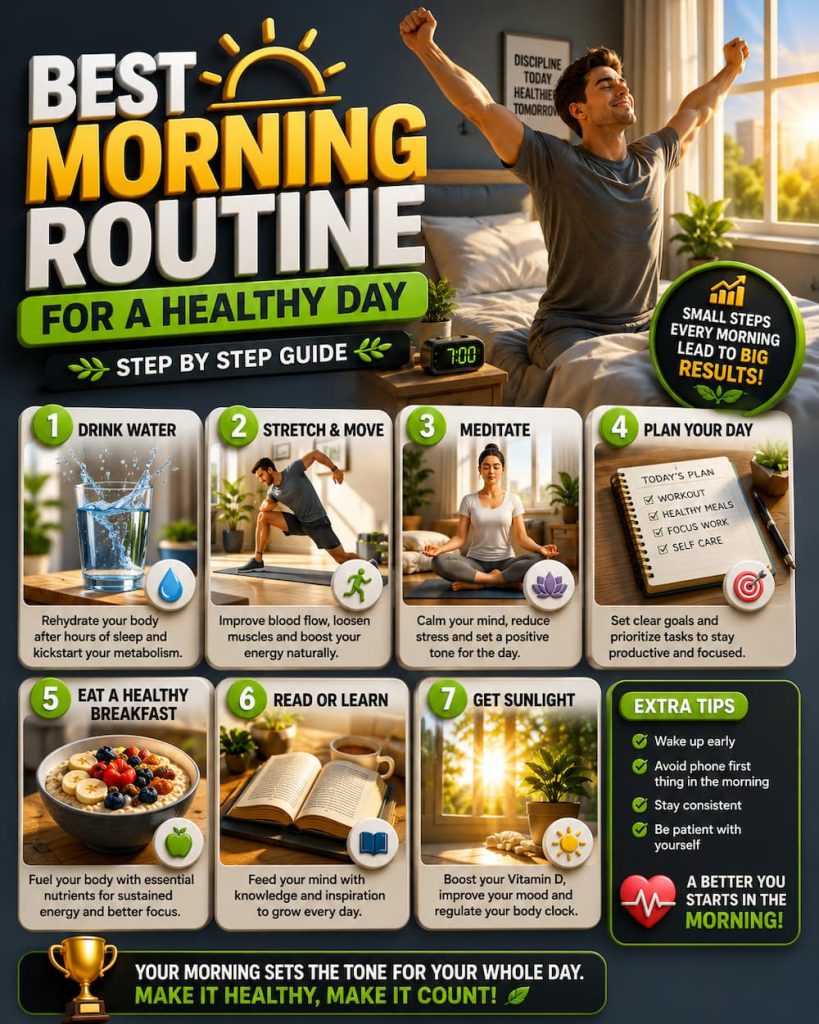
Below is a simple, step-by-step healthy morning routine you can actually stick to — no extreme discipline required.
Why Bother With a Morning Routine?

Think about it honestly: phone first, breakfast rushed or skipped, out the door already stressed. Sound familiar? A little structure in the morning breaks that cycle. It lowers stress, clears your head, and — over time — supports real physical health. That’s really the whole point of building healthy morning habits: fewer chaotic mornings, more days that start on your terms.
Step 1: Wake Up at a Consistent Time
The foundation of any healthy morning routine is simple — get up at roughly the same time every day, weekends included. This is one of those healthy morning habits that sounds boring but does most of the heavy lifting. Your body runs on an internal clock, and the more consistent your wake time, the easier mornings become over time.
Tip: Move your alarm clock (or phone) across the room. Once you’re up to turn it off, you’re far less likely to crawl back into bed.
Step 2: Drink a Glass of Water Right Away
After 7–8 hours without a sip, your body wakes up mildly dehydrated. A full glass of water — warm, if you like it that way — helps kickstart digestion and gently wakes up your system before that first cup of coffee.
Bonus tip: A squeeze of lemon in warm water is a small habit a lot of people in the fitness world swear by for digestion and an early vitamin C boost.
Step 3: Keep Your Phone Away for the First 30 Minutes
This one sounds easy on paper and is genuinely hard in practice. Checking emails or scrolling social media within minutes of waking up pushes your brain straight into reactive mode — before you’ve even had a chance to think for yourself.
Interestingly, this ties directly into your body’s hormones. Morning light exposure — not your phone screen — is what naturally raises your cortisol at the right time and helps you feel properly alert. A systematic review of research on light exposure and the body’s stress hormones found that bright light in the early morning consistently raises cortisol compared to dim light, which is a big part of why stepping outside (not scrolling in bed) is such an underrated way to wake up properly.
Use those first 30 minutes for yourself instead — stretch, sit quietly, or just look out the window.
Step 4: Move Your Body
You don’t need a full workout to benefit here — even 15–20 minutes of movement is enough to shake off the grogginess. A few easy options:
- Gentle yoga or stretching
- A brisk 20-minute walk
- A short home workout (no-equipment routines work great for this)
- Light cycling or jogging
Morning movement gets your metabolism going and releases endorphins, which is a fancy way of saying you’ll probably just feel better for the rest of the day. It’s also one of the easiest healthy morning habits to fit in, since even a short walk counts.
Step 5: Eat an Actual Breakfast
Skipping breakfast might feel like it saves time, but it usually backfires by mid-morning. A proper breakfast stabilizes blood sugar and keeps you from raiding the snack drawer by 11 AM. Harvard researchers pooling data from nine separate studies found that people who regularly skipped breakfast had roughly a 10% higher risk of developing metabolic syndrome compared to regular breakfast eaters — a good reminder that this meal isn’t as optional as it feels.
Good options include:
- Eggs with whole grain toast
- Oatmeal with fruit and nuts
- Greek yogurt with berries
- Avocado toast with a boiled egg
If you want to make sure your breakfast is actually pulling its weight nutritionally, it helps to know which foods are richest in the vitamins your body needs — and to lean on protein-packed options that keep you full for longer.
Step 6: Take Five Minutes for Mindfulness or Gratitude
Before the emails and to-do lists take over, give yourself five quiet minutes. This could be deep breathing, writing down three things you’re grateful for, or a short guided meditation.
It’s a small habit, but the research behind it isn’t small at all. A randomized controlled trial on gratitude-based training found that structured gratitude practice measurably reduced anxiety and depression symptoms in participants over just a few weeks. Five minutes a day is a low bar for that kind of payoff.
Step 7: Plan Your Top 3 Priorities
Before you walk out the door, jot down the three things that actually need to get done today — not fifteen, just three. It keeps you focused instead of reacting to whatever lands in your inbox first.
Sample Healthy Morning Routine Schedule
| Time | Activity |
|---|---|
| 6:00 AM | Wake up & drink a glass of water |
| 6:05 AM | No phone — just breathe and stretch |
| 6:15 AM | Movement: walk, yoga, or a quick workout (20 min) |
| 6:35 AM | Shower and get ready |
| 7:00 AM | Eat a proper breakfast |
| 7:20 AM | Mindfulness or gratitude journaling |
| 7:25 AM | Plan your top 3 tasks |
| 7:30 AM | Start the day, refreshed and focused |
Feel free to shift the times around — the order matters more than the exact clock.
Frequently Asked Questions

How long does it take to build a healthy morning routine?
Most people need about 3–4 weeks of consistency before a new morning routine starts to feel automatic rather than forced. Start with just two or three steps and add more once they stick.
What is the single most important habit in a healthy morning routine?
There isn’t one universal answer, but waking up at a consistent time tends to have the biggest ripple effect — it makes every other habit, from breakfast to movement, easier to fit in naturally.
Is it okay to check my phone right after waking up sometimes?
Occasionally, yes — it’s not going to undo your progress. But making it a daily first move tends to spike stress and pull your focus away before you’ve had a chance to set your own pace for the day.
Do I need to wake up at 5 AM for this to work?
? No. A healthy morning routine isn’t about waking up earlier than everyone else — it’s about what you do with the first hour after you wake up, whatever time that happens to be.
Can a morning routine really help with weight management?
Indirectly, yes. Regular sleep-wake times, a proper breakfast, and morning movement all support steadier blood sugar and better appetite control throughout the day, which makes healthier choices easier later on.
Final Thoughts
A healthy morning routine doesn’t need to be complicated or perfectly Instagrammable. Pick two or three of these steps, get comfortable with them, and build from there. Give it a few weeks, and you’ll likely notice a real shift in your energy, focus, and mood — not because you did anything extreme, but because you stopped starting your day in chaos. That’s really the quiet power of small, healthy morning habits stacked one on top of another.
Small, repeatable habits beat any one-time burst of motivation. Your day really does start the moment you open your eyes — might as well make it count.