
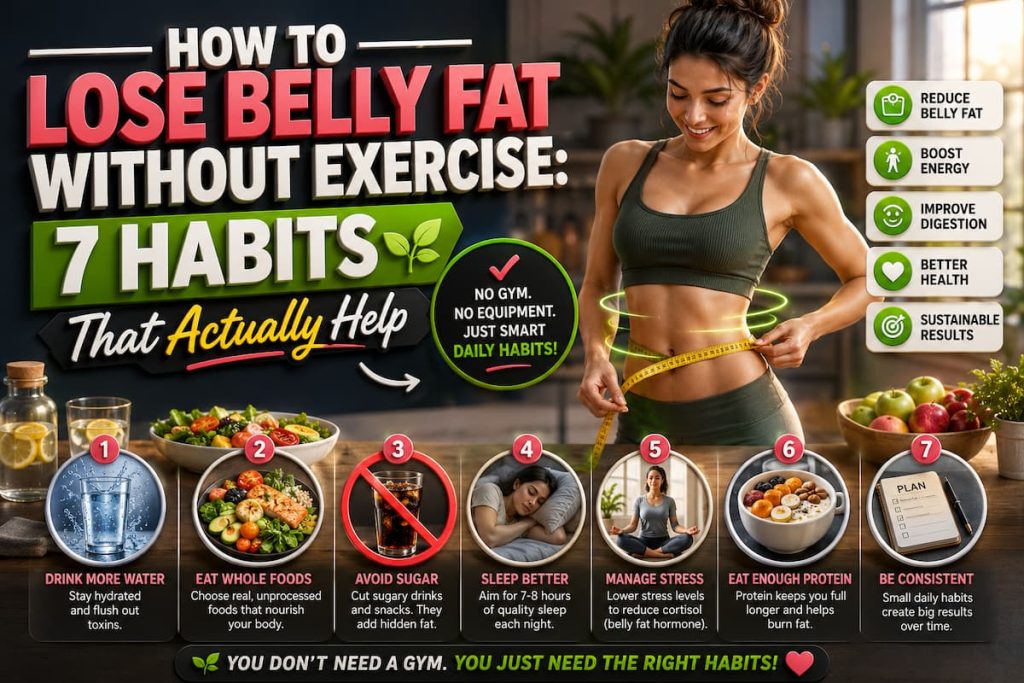
Let’s be honest — “just work out more” isn’t helpful advice when you’re already stretched thin between work, family, and everything else. If a gym membership or daily HIIT session isn’t realistic for you right now, you’re not stuck. It’s genuinely possible to lose belly fat without exercise by changing a few things about how you eat, sleep, and manage stress.
This isn’t about spot-reducing fat from one area — that’s not how bodies work. But belly fat, specifically the visceral kind that sits deep around your organs, responds strongly to lifestyle changes that have nothing to do with crunches or cardio. If your main goal is to lose belly fat without exercise, here are seven habits that actually move the needle.
First, What Are We Actually Trying to Lose?
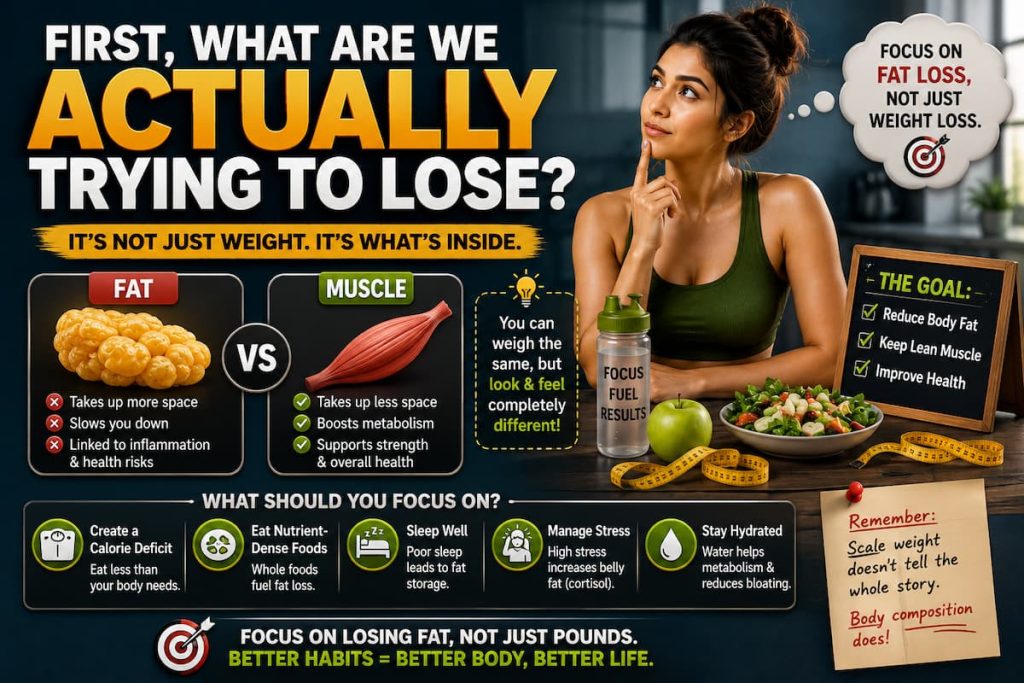
There are two types of fat around your midsection. Subcutaneous fat is the kind you can pinch — it sits just under the skin. Visceral fat is the more concerning one; it wraps around your internal organs and is linked to a higher risk of heart disease and diabetes. The good news is that visceral fat tends to respond faster to diet and lifestyle changes than the fat you can pinch. A simple way to track it at home is your waistline — Harvard Health notes that a waist circumference over 32 inches for women or 38 inches for men suggests excess visceral fat, so a tape measure works just as well as any fancy scale.
1. Add More Soluble Fiber to Your Meals
This is probably the single most underrated habit if you want to lose belly fat without exercise. Foods like oats, beans, apples, and carrots are rich in soluble fiber, which slows digestion and keeps you fuller for longer. A well-known five-year study on this exact question found something striking: participants who increased their soluble fiber intake by just 10 grams a day reduced their visceral fat by 3.7% over five years — without changing anything else about their exercise habits.
Easy swap: Add a handful of oats to your breakfast, or snack on an apple instead of chips.
2. Cut Back on Liquid Sugar
Sodas, sweetened coffees, and fruit juices are among the fastest ways to pile on visceral fat, mainly because liquid calories don’t fill you up the way food does — so you end up drinking hundreds of extra calories without feeling any different. Swapping even one sugary drink a day for water or unsweetened tea adds up fast over weeks and months.
3. Prioritize Protein at Every Meal
Protein does double duty here: it keeps you satisfied for longer, and your body burns slightly more calories digesting it compared to carbs or fat. This is one of the most reliable ways to lose belly fat without exercise, simply because it makes eating less feel natural instead of forced. If you’re not sure where to start, this list of high-protein foods is a good place to build your meals around, even without touching your exercise routine.
4. Get Your Sleep Under Control
Poor sleep doesn’t just make you tired — it directly disrupts the hormones that regulate hunger, and it keeps cortisol elevated for longer than it should be. That matters here specifically because visceral fat cells have a particularly strong response to cortisol. Aim for 7–8 consistent hours a night; it’s one of the few “free” changes that actually shows up on the scale over time, and it’s a core part of any real plan to lose belly fat without exercise.
5. Actively Manage Your Stress
Chronic stress and belly fat are more connected than most people realize. When cortisol stays elevated for weeks or months, your body starts storing fat preferentially around the midsection rather than burning it. One notable trial looked at this directly: a four-month mindfulness program for stress-related eating helped participants lower their morning cortisol and reduce abdominal fat, with the biggest improvements in stress linked to the biggest reductions in belly fat.
Simple starting point: Even 5–10 minutes of daily breathing exercises or a short walk outside (which still counts as rest, not training) can measurably lower stress hormones — and stress control is honestly one of the most overlooked pieces of the puzzle if your goal is to lose belly fat without exercise.
6. Watch Your Portions, Not Just Your Food Choices
You can eat “clean” all day and still carry extra belly fat if portions are consistently larger than your body needs. This doesn’t mean counting every calorie — it means paying attention to things like using a smaller plate, eating slowly, and stopping when you’re satisfied rather than full. It’s a quiet, unglamorous habit, but it’s one of the most sustainable ways to lose belly fat without exercise long-term.
If bloating after meals is part of the problem for you, it’s worth checking out how to reduce bloating naturally, since a lot of what feels like stubborn belly fat is actually digestive bloating that responds to different fixes entirely.
7. Stay Consistently, Gently Active — Without “Exercising”
This might sound contradictory on a list about losing belly fat without exercise, but there’s a difference between structured workouts and simply not being sedentary all day. Taking the stairs, doing chores, or standing more during the day (sometimes called NEAT — non-exercise activity thermogenesis) burns real calories without ever needing a gym bag.
Staying active throughout the day, even without a workout, plays a real role if your goal is to lose belly fat without exercise.
Quick Reference: Habit vs. Effort Level
| Habit | Effort Level | Where to Start |
|---|---|---|
| Add soluble fiber | Low | One high-fiber food per meal |
| Cut liquid sugar | Low | Swap 1 sugary drink a day |
| Prioritize protein | Medium | Add a protein source to breakfast |
| Improve sleep | Medium | Fixed bedtime, 7–8 hours |
| Manage stress | Medium | 5–10 min of daily breathing/walking |
| Watch portions | Low | Smaller plate, eat slower |
| Stay non-sedentary | Low | Stand/walk more through the day |
Frequently Asked Questions
Can you really lose belly fat without exercising at all?
Yes, to a meaningful degree. Diet, sleep, and stress management all directly affect visceral fat storage. Exercise helps too, of course, but it’s not the only lever — and for many people, fixing diet and sleep first produces faster, more noticeable results.
How long does it take to see results from these habits?
Most people notice less bloating and a slightly looser waistband within 2–4 weeks. More measurable visceral fat loss (the kind you’d see on a scan or waist measurement) tends to show up over 2–3 months of consistency.
Is belly fat mostly about genetics, or can lifestyle really change it?
Genetics does influence where your body tends to store fat, but visceral fat specifically responds well to lifestyle changes — arguably better than fat in other areas, since it’s more metabolically active.
Does stress really cause belly fat, or is that a myth?
It’s not a myth, but it’s not the whole story either. Chronic stress raises cortisol, and cortisol receptors are especially dense in visceral fat, which is why stress tends to show up around the midsection more than elsewhere. It works alongside diet and sleep rather than replacing them.
What’s the very first habit I should start with
If you want the lowest-effort, highest-impact starting point, begin with soluble fiber and cutting liquid sugar. Both require no willpower marathon — just a couple of small daily swaps.
Final Thoughts
Losing belly fat without exercise isn’t a shortcut — it’s just a different, equally valid path. Fiber, protein, sleep, and stress management all pull real physiological levers that have nothing to do with how many times you hit the gym this week. Pick one or two habits from this list, stick with them for a month, and build from there.
You don’t need a perfect routine. You need one you’ll actually keep doing.