
If you have ever pushed yourself to total exhaustion on a treadmill, sweating heavily and gasping for air just to drop a few pounds, you might be surprised to learn that sprinting at maximum effort isn’t actually the most efficient way to burn body fat.
In recent years, exercise scientists, elite endurance athletes, and longevity experts have shifted their focus toward a simpler, more sustainable strategy: zone 2 cardio for fat loss.
Instead of pushing your body to its absolute limits, Zone 2 training relies on sustained, low-intensity movement that specifically targets stored fat as your primary energy source. In this complete guide, you will learn how zone 2 cardio for fat loss works, why it is so effective for sustainable weight loss, how to calculate your personal target heart rate, and how to structure your weekly routine.
What Is Zone 2 Cardio?
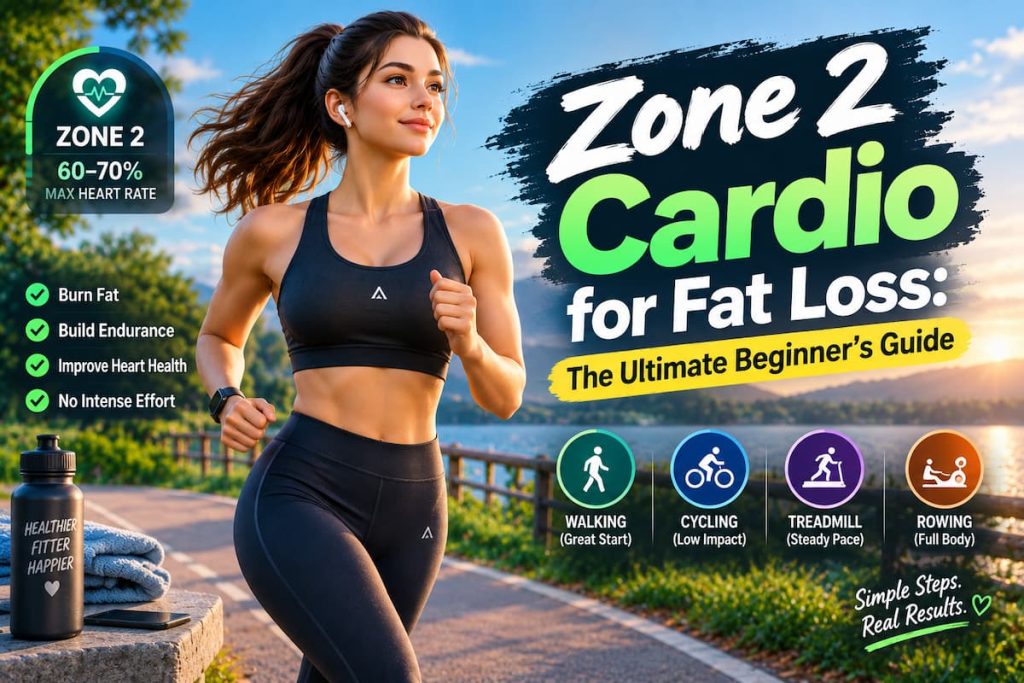
Zone 2 cardio refers to low-intensity, steady-state (LISS) exercise performed at roughly 60% to 70% of your maximum heart rate. At this pace, your body remains strictly in an aerobic state, meaning your mitochondria rely heavily on oxygen to break down fat stores for fuel rather than burning through glycogen (carbohydrates).
A simple rule of thumb when using zone 2 cardio for fat loss is the “Conversational Test.” While exercising, you should be able to maintain a full sentence or conversation without gasping for breath. If you are breathing too heavily to talk comfortably, you have likely crossed into Zone 3 or higher.
According to research from institutions like Harvard Health, aerobic exercises performed at moderate intensity build long-term cardiovascular endurance while improving overall metabolic health.
Why Zone 2 Cardio for Fat Loss Is So Effective
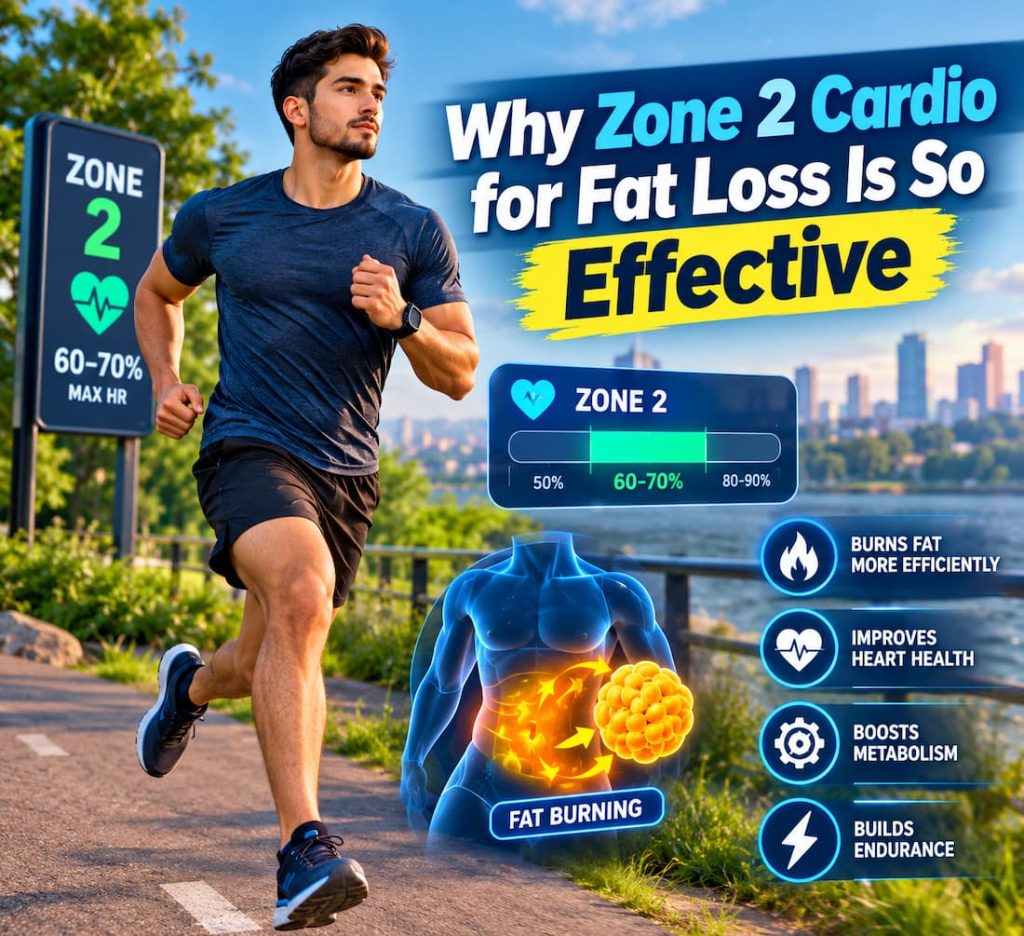
Many people assume that harder workouts always produce better results. However, high-intensity training places heavy stress on the central nervous system and primarily burns sugar. Here is why prioritizing zone 2 cardio for fat loss is a total game-changer for long-term health:
1. Maximum Fat Oxidation
At lower heart rates, your cellular powerhouses (mitochondria) utilize fat as their main fuel source. As exercise intensity increases toward maximum effort, your body switches to burning carbohydrates because glucose breaks down faster than fat.
2. Low Recovery Impact
Unlike grueling high-intensity interval training (HIIT), utilizing zone 2 cardio for fat loss does not drain your central nervous system or leave your muscles excessively sore. You can easily combine Zone 2 sessions with a heavy strength workout, such as a Full Body Dumbbell Workout at Home, without risking overtraining or burnout.
3. Improved Insulin Sensitivity & Metabolic Flexibility
Regular Zone 2 exercise increases the density and health of your mitochondria. Over time, your body becomes far better at switching between burning fat and carbohydrates efficiently, keeping your energy stable throughout the day.
How to Calculate Your Heart Rate for Zone 2 Cardio for Fat Loss
To get the best results from zone 2 cardio for fat loss, you need to know your target heart rate range. Here are two simple ways to find yours:
Method 1: The Maffetone Method (180 Formula)
- Subtract your current age from 180.
- The resulting number is your upper limit for Zone 2 heart rate in beats per minute (BPM).
- Your ideal training zone is roughly 10 beats below this maximum number.
Example: If you are 30 years old:
- $180 – 30 = 150\text{ BPM}$ (Upper limit)
- Your Zone 2 target range is 140 to 150 BPM.
Method 2: Percentage of Max Heart Rate
Calculate your estimated maximum heart rate ($220 – \text{age}$) and multiply by 0.60 to 0.70.
Medical organizations like the Mayo Clinic emphasize that tracking your target heart rate ensures you stay safely within your optimal aerobic conditioning zone.
Best Types of Workouts for Zone 2 Cardio for Fat Loss
You don’t need fancy equipment to build a solid aerobic base. Here are several accessible ways to incorporate zone 2 cardio for fat loss into your daily life:
- Brisk Walking on an Incline: Set a treadmill to a 3–5% incline and walk at a steady pace.
- Stationary Cycling: Spin at a smooth, constant cadence where pedaling feels easy and controlled.
- Outdoor Jogging or Rucking: Keep your pace slow and steady. If your heart rate spikes too high, drop down to a brisk walk until it settles.
- Rowing Machine: Perform smooth, rhythmic strokes while keeping your heart rate monitored.
If you enjoy variety in your conditioning work, you can also incorporate high-volume movements into your week. For example, testing yourself with 100 Kettlebell Swings Every Day for 30 Days is another fantastic way to build functional strength alongside your steady-state cardio.
How Much Zone 2 Cardio Should You Do Weekly?
To get maximum benefits from zone 2 cardio for fat loss, aim for:
- Beginners: 3 sessions per week, 30 to 40 minutes per session.
- Intermediate / Advanced: 3 to 4 sessions per week, 45 to 60 minutes per session.
Consistency matters far more than intensity here. Because Zone 2 is gentle on your joints and muscles, it can easily be sustained year-round.
What to Wear for Zone 2 Cardio Sessions
To maintain a consistent heart rate and avoid stopping unnecessarily, comfort and temperature regulation are essential. Wearing breathable, moisture-wicking athletic gear helps keep your core body temperature stable so your heart rate doesn’t drift upward prematurely due to overheating.
If you are expanding your fitness wardrobe for competitive events or structured conditioning, check out our guide on What to Wear for Hyrox Race for expert apparel recommendations.
Frequently Asked Questions (FAQ)
Is zone 2 cardio for fat loss better than HIIT?
While HIIT burns more total calories per minute, zone 2 cardio for fat loss derives a much higher percentage of its burned calories directly from fat. Additionally, Zone 2 requires significantly less recovery time, allowing you to train more consistently.
Can I do Zone 2 cardio every day?
Yes, because Zone 2 places minimal stress on your joints and central nervous system, light daily sessions (such as 30-minute brisk walks) are safe for most healthy individuals.
How long does it take to see results?
Most people notice improvements in their resting heart rate, daily energy levels, and stamina within 3 to 4 weeks. Fat loss becomes noticeable over 6 to 8 weeks when combined with a healthy diet.
Final Thoughts
Mastering zone 2 cardio for fat loss is all about patience and consistency over raw intensity. By keeping your heart rate in the sweet spot, you build a powerful aerobic engine that burns stored body fat efficiently without leaving you exhausted for your strength workouts.
Start with 30 minutes 3 times a week, keep your pace conversational, and enjoy a sustainable approach to long-term fitness!