
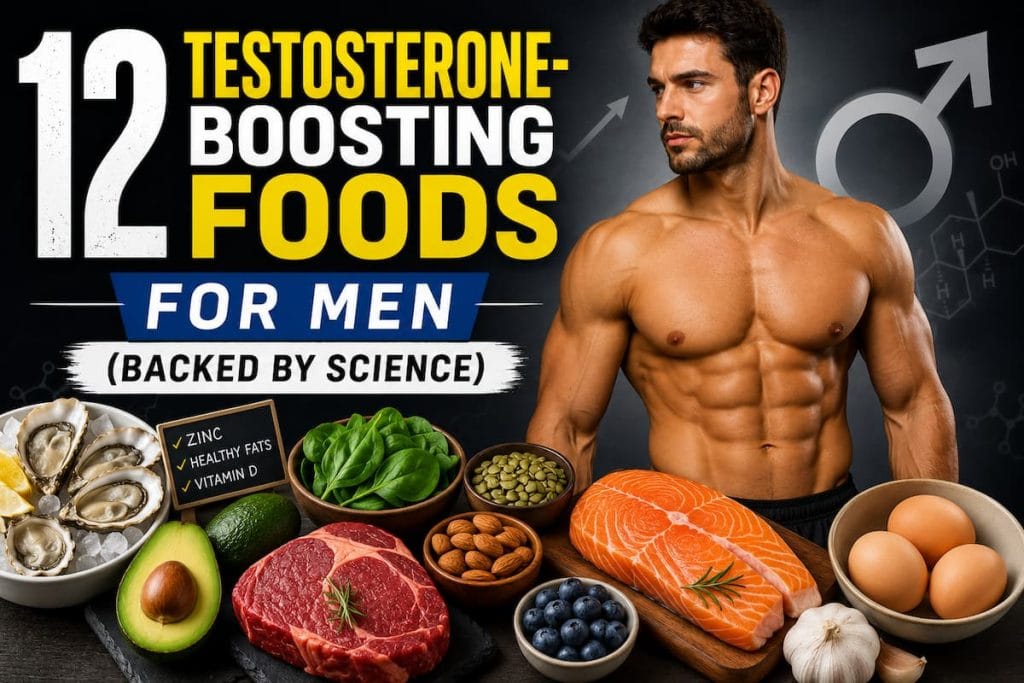
The right testosterone boosting foods for men can make a real difference in how you feel day to day. If you’ve been feeling a little more tired than usual, struggling to hold onto muscle even though you’re training hard, or just not quite feeling like “yourself” — diet might be a bigger piece of the puzzle than you think.
The good news? You don’t need expensive supplements or a prescription to start supporting your hormone health. A handful of everyday foods, eaten consistently, can make a real difference. Below is a practical, no-nonsense list of testosterone-boosting foods for men, along with the actual science behind why they work.
Why Diet Matters for Testosterone
Before we get to the food list, it helps to understand the “why.” Testosterone production depends heavily on three nutrients in particular: zinc, magnesium, and vitamin D. When any of these run low, your body simply doesn’t have the raw material it needs to produce hormones efficiently. On top of that, diets high in processed foods, fried snacks, and sugar have repeatedly been linked to lower testosterone, while whole-food diets rich in healthy fats and lean protein tend to support healthier hormone levels.
This isn’t about one “miracle” ingredient. It’s about consistently feeding your body what it needs. That’s the foundation of any list of testosterone boosting foods for men worth following.
If you’re already tracking your protein intake, this pairs naturally with our protein intake calculator — since protein and hormone health tend to go hand in hand for muscle recovery and growth.
12 Testosterone-Boosting Foods for Men
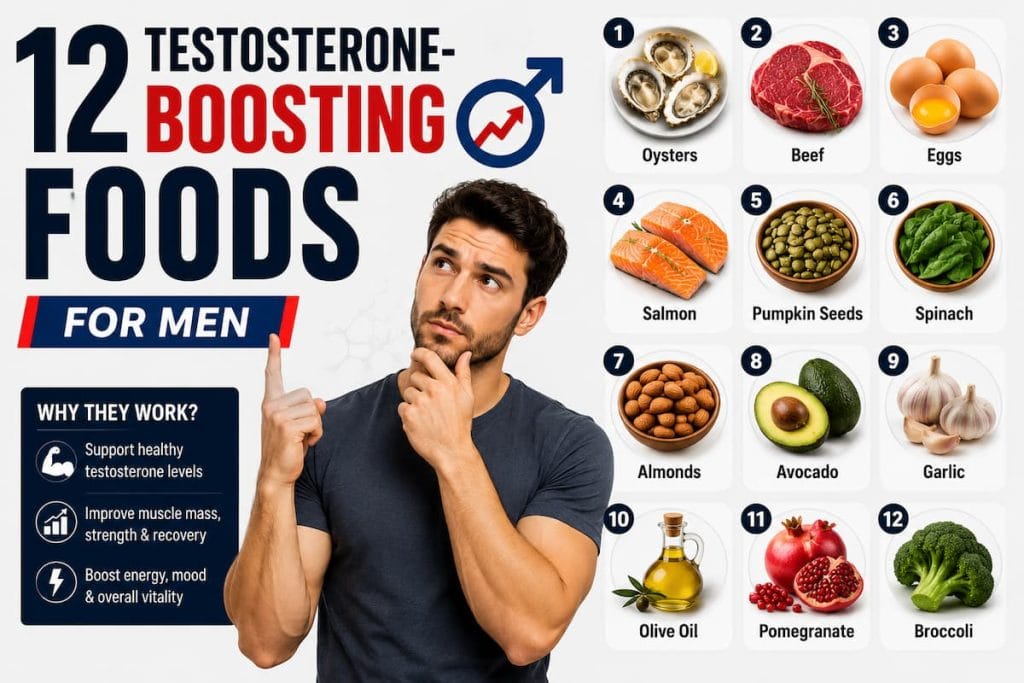
1. Oysters Oysters contain more zinc per serving than almost any other food, and zinc deficiency is one of the most well-documented causes of low testosterone.
2. Fatty Fish (Salmon, Sardines, Mackerel) These are loaded with vitamin D and omega-3 fatty acids, both of which play a direct role in hormonal signaling and inflammation control.
3. Egg Yolks Eggs get an unfair reputation because of cholesterol, but cholesterol is actually the building block your body uses to produce testosterone in the first place. Egg yolks also carry selenium, which supports healthy hormone production.
4. Spinach Rich in magnesium, spinach has been linked in several studies to higher testosterone levels, especially in men who train regularly.
5. Pumpkin Seeds A convenient, snackable source of both zinc and magnesium — easy to toss into oatmeal, salads, or just eat by the handful.
6. Brazil Nuts One or two a day is enough to get a solid dose of selenium, a mineral tied to healthy testicular function.
7. Avocados High in monounsaturated fats and boron, avocados support healthy cholesterol levels, which indirectly supports testosterone production.
8. Garlic and Onions These contain compounds that may help lower cortisol, the stress hormone that competes with testosterone in the body.
9. Extra Virgin Olive Oil A staple of the Mediterranean diet, olive oil has been associated with better testosterone profiles compared to diets high in processed vegetable oils.
10. Beans and Legumes A solid plant-based source of zinc and magnesium, useful if you’re cutting back on red meat.
11. Dark Chocolate (70%+ Cocoa) Rich in flavonoids and magnesium — a small square after dinner isn’t just a treat, it’s functional.
12. Pomegranate Some research suggests pomegranate juice may help lower cortisol while modestly supporting testosterone, alongside its cardiovascular benefits.
What to Cut Back On
Just as important as what you add is what you reduce. Diets consistently high in fried food, refined sugar, and excessive alcohol have been linked to lower testosterone levels. You don’t need to eliminate these completely — but if your plate is mostly processed food, no amount of testosterone boosting foods for men is going to fix that on its own.
Pair these food choices with a solid morning routine — our high-protein breakfast ideas guide is a good place to start if mornings are where your diet usually falls apart.
A Quick Conversation We Get a Lot
Reader: “Okay but realistically, if I just start eating these foods, will my testosterone actually go up?”
Us: Honestly? It depends. If you’re already eating a solid, balanced diet and your levels are normal, these foods probably won’t move the needle much. But if you’re deficient in zinc, magnesium, or vitamin D — which is more common than people think — fixing that gap can make a noticeable difference in energy, mood, and recovery.
Reader: “So it’s not a quick fix?”
Us: Not really, no. Think of it less like a switch and more like fixing a leak. If your diet has been quietly working against your hormones for years, a few weeks of oysters and spinach won’t undo that overnight. But give it consistent effort over 8-12 weeks alongside decent sleep and training, and most guys do notice a difference.
Reader: “What about supplements instead?”
Us: Food first, always. Supplements can help fill specific gaps, but according to a Healthline breakdown of testosterone-boosting foods, whole foods come with a package of supporting nutrients that isolated supplements simply can’t replicate. If you suspect a serious deficiency, that’s a conversation for your doctor, not a supplement aisle.
The Bottom Line
These testosterone boosting foods for men aren’t a magic fix, but they genuinely support your body’s natural process. There’s no single food that will transform your hormone levels overnight, and anyone promising that is probably selling something. But a diet built around zinc, magnesium, healthy fats, and vitamin D — while cutting back on processed junk — genuinely does support your body’s ability to produce testosterone the way it’s meant to. According to WebMD’s guide on natural testosterone boosters, this kind of whole-food approach also tends to support broader markers of health, not just hormones.
Start small. Swap a processed snack for a handful of pumpkin seeds. Add salmon to your week. Cut back on the fried food a little. Your hormones — and honestly, the rest of your body — will thank you for it.
FAQs
Which food has the most zinc for boosting testosterone?
Oysters top the list by a wide margin among testosterone boosting foods for men. If shellfish isn’t your thing, red meat, pumpkin seeds, and beans are solid backups.
Can diet alone fix low testosterone?
Diet helps close nutrient gaps, but it isn’t a substitute for medical treatment. If you suspect clinically low testosterone, get bloodwork done and talk to a doctor.
How long does it take to see a difference from testosterone-boosting foods?
Most guys who stay consistent notice changes in energy and recovery somewhere around 8 to 12 weeks — not overnight.
Do testosterone-boosting foods work for everyone?
Not really. If your levels are already normal and your diet is decent, the effect will be minimal. These testosterone boosting foods for men help most when they’re correcting an actual deficiency.
Is red meat necessary for testosterone?
No. It’s a good zinc source, but oysters, beans, and pumpkin seeds can cover the same nutrients for anyone who prefers to eat less red meat.
e who prefers to eat less red meat.