
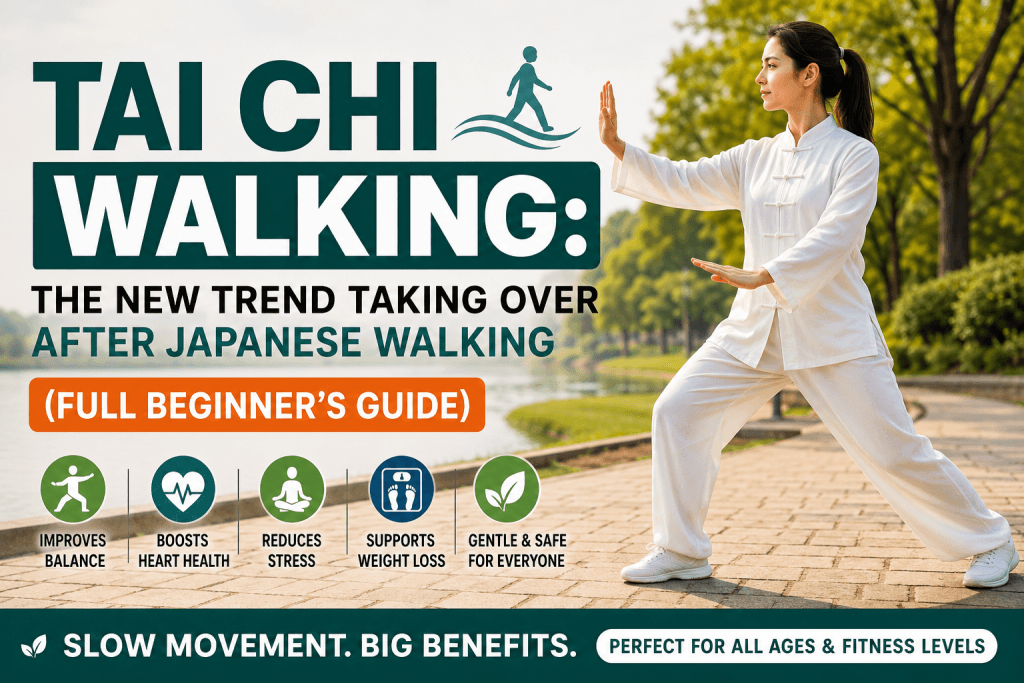
If you thought you’d already seen every walking trend the internet had to offer, here’s one more to add to the list. Just when everyone finally got the hang of the Japanese walking method, a new one showed up on your For You page — slower, quieter, and honestly a little strange to watch at first. It’s called tai chi walking, and unlike most fitness fads that disappear in a few weeks, this one keeps growing.
So what’s actually going on here? Is this just another 30-second TikTok clip with no substance behind it, or is there something worth paying attention to? Turns out, it’s a bit of both — and we’re going to break down exactly what it is, how to do it properly, and whether it deserves a spot in your routine.
What Is Tai Chi Walking, Exactly?
Tai chi walking isn’t a brand-new invention. It’s actually the foundation of tai chi itself — a Chinese martial art that’s been practiced for centuries, long before anyone was filming it for social media. What’s new is that people have pulled this one element out of the full tai chi form and turned it into a standalone practice.
The idea is simple to describe but surprisingly hard to do well. Instead of walking the way you normally would — where your weight is constantly shifting between both feet as you move forward — tai chi walking asks you to put 100% of your weight on one leg before you even think about lifting the other foot. There’s no momentum carrying you forward. Every step is a deliberate, controlled transfer of weight, usually paired with slow, steady breathing.
It sounds almost too easy. Try it for even a minute and you’ll realize how much your body relies on momentum during a normal walk — and how much balance and control this “empty leg, full leg” method actually demands.
Why Is Everyone Suddenly Talking About This?
A few things are lining up at once. First, people are genuinely burned out on high-intensity everything. After years of HIIT classes, 5am workouts, and no-days-off culture, there’s a real shift happening toward gentler forms of movement that don’t leave you wiped out. Second, walking trends in general have been having a moment — first the “hot girl walk,” then Japanese interval walking, and now this.
According to a recent Marie Claire UK feature on the trend, search interest first spiked at the start of the year and hasn’t slowed down since — which experts say is usually a good sign it’s more than a passing fad. It also doesn’t hurt that it requires literally nothing: no shoes, no equipment, no gym membership. Just a few feet of space and a few minutes.
The Actual Benefits (Backed by Something More Than a TikTok Caption)

It’s easy to be skeptical of anything that blows up on social media this fast. But tai chi as a whole has decades of research behind it, even if this specific “walking-only” version is new. Here’s what the practice is genuinely good for:
1. Balance and fall prevention. This is where the evidence is strongest, by far. The slow, single-leg weight transfer trains the small stabilizing muscles in your ankles, knees, and hips — the same muscles that keep you upright when you trip on an uneven sidewalk. Tai chi has even been recognized by the CDC as an evidence-based fall prevention method, and the Tai Chi for Health Institute notes that structured tai chi programs have shown close to a 70% reduction in recurring falls among older adults in clinical trials.
2. Stress and nervous system regulation. Because the movement is so slow and paired with breath control, it activates your parasympathetic nervous system — basically your body’s “rest and digest” mode. This is the opposite of what happens during something like sprint intervals, where cortisol tends to spike.
3. Better sleep. If you’ve struggled with a racing mind at bedtime, this might actually help more than you’d expect. Practices like this pair well with the wind-down habits in our guide on how to sleep better at night — both work by calming your nervous system before you try to fall asleep, rather than relying on willpower alone.
4. Posture and body awareness. A lot of us spend all day hunched over a laptop or phone. Tai chi walking forces you to think about your spine, shoulders, and how your weight sits in your feet — something regular walking rarely makes you notice.
One thing worth being upfront about: this isn’t a cardio workout, and it’s not going to build serious muscle on its own. If your main goal is burning calories or getting stronger, this works best as an addition to your routine, not a replacement for it.
How to Do Tai Chi Walking (Step-by-Step)
You don’t need a teacher to get started, though working with one eventually can help refine your form. Here’s the basic version:
- Stand tall. Feet hip-width apart, knees slightly soft (not locked), shoulders relaxed away from your ears.
- Shift your full weight onto one leg. Take your time here. You should feel one leg become completely “full” and the other become “empty” — light enough to lift without shifting your hips to compensate.
- Lift the empty foot slowly and move it forward, staying low and controlled rather than swinging it.
- Place the heel down first, then slowly roll through to the toes as you transfer your weight into that leg.
- Pause briefly before starting the next step. A single step should take somewhere around 3-5 seconds when you’re starting out.
- Keep breathing steady and continuous. If you notice you’re holding your breath or gasping, you’re moving too fast — slow down even more.
- Let your arms swing gently in opposition to your legs, the way they naturally would in a slow, relaxed walk.
Start with just 5 minutes a day. It sounds short, but the concentration this requires adds up fast. Once it feels natural, you can build up to 10-15 minute sessions, or even use it as a moving meditation for 20-30 minutes if you enjoy it.
A good place to practice is a flat, even surface — indoors on a hard floor, or outside on pavement or grass. Save uneven terrain for later once your balance improves.
Who Should (and Shouldn’t) Try This
This is a great fit if you’re an older adult concerned about balance or falls, someone recovering from an injury who needs a gentle re-entry into movement, or someone dealing with chronic stress who wants something calming that still counts as “doing something” for your health.
It’s less ideal as your only form of exercise if your goals are weight loss, cardiovascular endurance, or building muscle. In that case, pair it with strength training or something like the routines in our low-impact exercises for beginners at home guide so you’re covering both ends — gentle mobility work and actual strength stimulus.
If you have any existing balance disorders, recent surgery, or joint issues, it’s worth checking with a doctor or physical therapist before starting, and ideally learning the basics from an instructor rather than a video alone, since the balance elements can be tricky to self-correct.
Tai Chi Walking vs. Japanese Walking: What’s the Difference?
Since we’ve covered both on this site, people keep asking how they compare. The short version: Japanese walking (also known as interval walking training) alternates between 3 minutes of fast-paced walking and 3 minutes of slow walking, and it’s built primarily for cardiovascular fitness and fat loss. Tai chi walking, on the other hand, isn’t about pace or heart rate at all — it’s about control, balance, and mindfulness at a consistently slow speed.
They’re not competing with each other. If anything, they complement each other well: use Japanese walking on days you want a cardio-focused session, and tai chi walking on recovery days or in the evening when you want to wind down.
Frequently Asked Questions
Is tai chi walking actually a workout, or just stretching? It’s more than stretching, but it’s not a traditional cardio workout either. Because you’re holding your full body weight on one leg at a time in a controlled way, it works your stabilizing muscles harder than you’d expect — similar in effort to a slow, sustained balance exercise. Just don’t expect it to replace your usual cardio or strength sessions.
How long before I notice a difference in my balance? Most people report feeling steadier within a few weeks of consistent daily practice, even at just 5-10 minutes a day. The research behind traditional tai chi programs (which this is based on) typically shows measurable balance improvements after 8-12 weeks of regular practice.
Can I do tai chi walking indoors? Yes, and it’s actually a great option for small spaces since you don’t need to cover much distance — a few steps forward and back in a hallway or living room is enough.
Do I need to learn full tai chi to benefit from this? No. Tai chi walking is often used as the entry point into tai chi precisely because it isolates the most foundational skill — weight transfer — without requiring you to memorize a full sequence of movements.
Is tai chi walking safe for seniors? Generally yes, and it’s frequently recommended by physical therapists for older adults specifically because it’s low-impact and improves the kind of balance that helps prevent falls. That said, anyone with a history of falls or a balance disorder should check with their doctor first and consider learning from an instructor initially.
Will tai chi walking help me lose weight? Not on its own — it doesn’t burn a significant number of calories compared to brisk walking or cardio. Where it can help is indirectly, by building the kind of consistent, sustainable movement habit that makes it easier to stick with a broader fitness routine long-term.
Final Thoughts
At the end of the day, tai chi walking isn’t going to replace your workouts, and it was never meant to. What it does offer is something a lot of us are actually missing — a few quiet minutes where you’re not chasing a step count, a heart rate zone, or a calorie number. Just you, your breath, and paying attention to how your body moves for once.
If you’re curious, there’s really no reason not to try it. Give it five minutes tomorrow morning before your coffee, or in the evening when you’re winding down. Worst case, you’ve spent five calm minutes. Best case, you’ve found a habit that quietly makes everything else — your balance, your stress levels, your sleep — a little bit better.
Curious how tai chi walking stacks up against the other viral walking trend of the year? Check out our full breakdown of the Japanese walking method and decide which one fits your goals better — or do what a lot of people are doing and use both.