
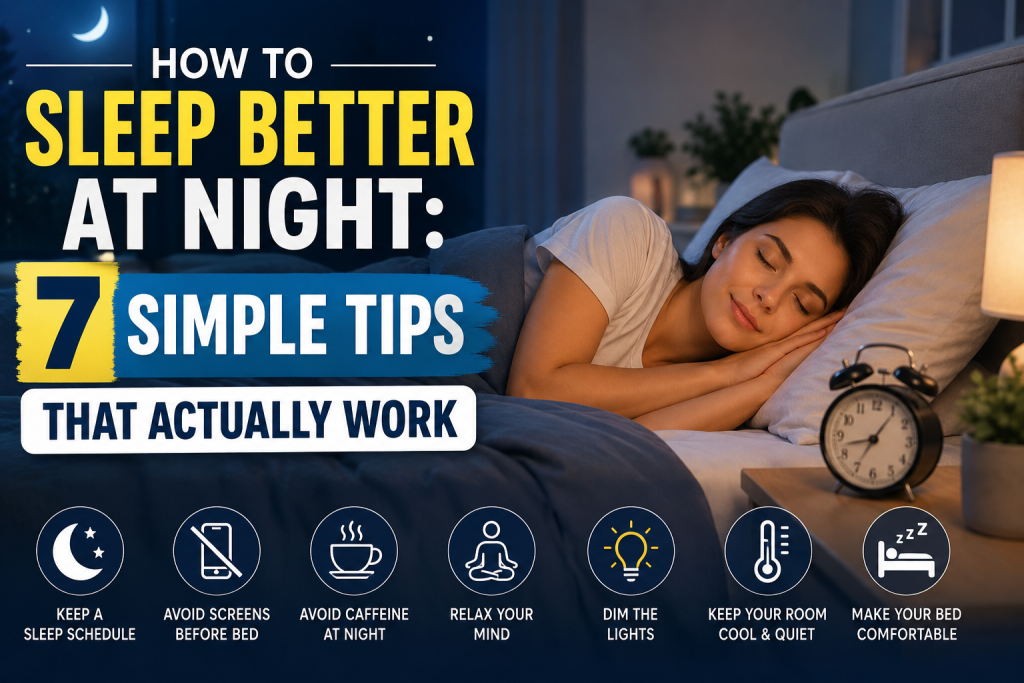
If you’re wondering how to sleep better at night, these simple tips can help you improve your sleep naturally.
If you want to know how to sleep better at night, you’re in the right place.
It’s almost midnight, you’re scrolling through your phone, and before you know it, another hour has passed. Sound familiar? Millions of people struggle with getting enough quality sleep, but the good news is that improving your sleep doesn’t have to be complicated.
The truth is, good sleep isn’t about luck. It’s about a few small habits done consistently. In this guide, we’ll walk through 7 simple, science-backed tips that can help you fall asleep faster, stay asleep longer, and wake up feeling refreshed.
Whether you’re dealing with occasional sleeplessness or simply want to improve your sleep quality naturally, these practical tips can help you build healthier bedtime habits.
How to Sleep Better at Night: 7 Science-Backed Tips

Sleep isn’t just “rest.” While you’re sleeping, your body repairs muscles, balances hormones, processes memories, and strengthens your immune system. Poor sleep over time can lead to low energy, poor concentration, mood changes, weakened immunity, and even weight gain.
The good news? You don’t need expensive sleep gadgets or medication. Small, consistent lifestyle changes can make a noticeable difference within just a couple of weeks.
1. Stick to a Consistent Sleep Schedule
Your body follows an internal clock called the circadian rhythm. Going to bed and waking up at different times every day can disrupt this rhythm and reduce your sleep quality.
Try this: Choose a bedtime and wake-up time that you can stick to every day—including weekends. After a week or two, you’ll likely notice that falling asleep becomes much easier.
The Sleep Foundation recommends keeping a consistent sleep schedule as one of the most effective ways to improve sleep quality.
2. Avoid Screens Before Bed
This is one of the most effective ways to improve sleep naturally. The blue light from phones, tablets, and laptops suppresses melatonin—the hormone that helps your body prepare for sleep.
Try this: Turn off electronic devices at least one hour before bedtime. Instead, read a book, listen to calming music, or practice gentle stretching.
3. Eat and Drink Wisely in the Evening
Caffeine can stay in your body for six hours or even longer. That afternoon coffee may be the reason you’re still awake late at night.
Heavy meals, spicy foods, and sugary snacks before bedtime may also interfere with your sleep.
Try this: Avoid caffeine after early afternoon. If you’re hungry before bed, choose a light snack such as a banana, yogurt, or a handful of almonds.
Poor digestion and bloating after dinner can also make it harder to fall asleep comfortably. Eating large meals too late or choosing foods that cause gas may disrupt your sleep and leave you feeling restless during the night. If bloating is something you struggle with, read our How to Reduce Bloating Naturally After Eating guide for simple tips to improve digestion and support better sleep.
4. Create a Bedroom That Promotes Better Sleep
Your bedroom should signal your brain that it’s time to rest—not work or scroll social media.
Try this:
- Keep your room cool and dark.
- Reduce noise whenever possible.
- Use comfortable pillows and bedding.
- Reserve your bed for sleeping instead of watching TV or working.
These simple changes can help your brain associate your bedroom with restful sleep.
5. Get Morning Sunlight Every Day
Many people don’t realize that getting sunlight during the day actually helps you sleep better at night.
Natural light helps regulate your circadian rhythm and tells your body when it’s time to feel awake and when it’s time to wind down.
Try this: Spend at least 15–20 minutes outdoors in the morning or early afternoon.
According to the Centers for Disease Control and Prevention (CDC), getting enough quality sleep is essential for both physical and mental health.
6. Exercise Regularly for Better Sleep
Regular physical activity is one of the best natural ways to improve sleep quality. Exercise reduces stress, supports healthy hormone balance, and helps regulate your sleep cycle.
Aim for at least 30 minutes of moderate exercise most days of the week. However, try to finish intense workouts at least two to three hours before bedtime.
If you’re just getting started, check out our Home Workout for Beginners: No Equipment, No Excuses:
👉 https://fitnessguidepro.com/home-workout-for-beginners/
7. Relax Your Mind Before Going to Bed
A busy mind often keeps people awake even when they’re physically tired.
Stress, anxiety, and constantly thinking about tomorrow can make it difficult to fall asleep.
Try this:
- Practice deep breathing.
- Stretch gently for five minutes.
- Read a few pages of a book.
- Write tomorrow’s to-do list before bed.
Creating a relaxing bedtime routine tells your brain it’s time to wind down.
Frequently Asked Questions
How many hours of sleep do adults need?
Most adults need 7–9 hours of sleep each night for optimal physical and mental health.
Why do I wake up during the night?
Nighttime awakenings may be caused by stress, an inconsistent sleep schedule, caffeine, alcohol, or an uncomfortable sleeping environment.
Are naps good or bad?
Short naps lasting 20–30 minutes can improve focus and energy without affecting nighttime sleep.
Does exercise really improve sleep?
Yes. Regular exercise is strongly linked to better sleep quality, reduced stress, and improved overall health.
How long does it take to fix a bad sleep schedule?
For most people, noticeable improvements occur within 1–2 weeks of maintaining consistent sleep habits.
Many people ask how to sleep better at night without medication.
Final Thoughts: How to Sleep Better Naturally
Learning how to sleep better at night doesn’t require expensive products or complicated routines. Small, consistent habits can have a big impact on your sleep quality and overall well-being.
Start by choosing just two or three of the tips above and practice them every night. Over time, these healthy habits can help you fall asleep faster, stay asleep longer, and wake up feeling more refreshed.
Remember, better sleep is one of the best investments you can make in your physical health, mental clarity, and daily energy.
Learning how to sleep better at night takes consistency, but these healthy habits can make a big difference.
Sweet dreams! 😴
Focus Keyword