
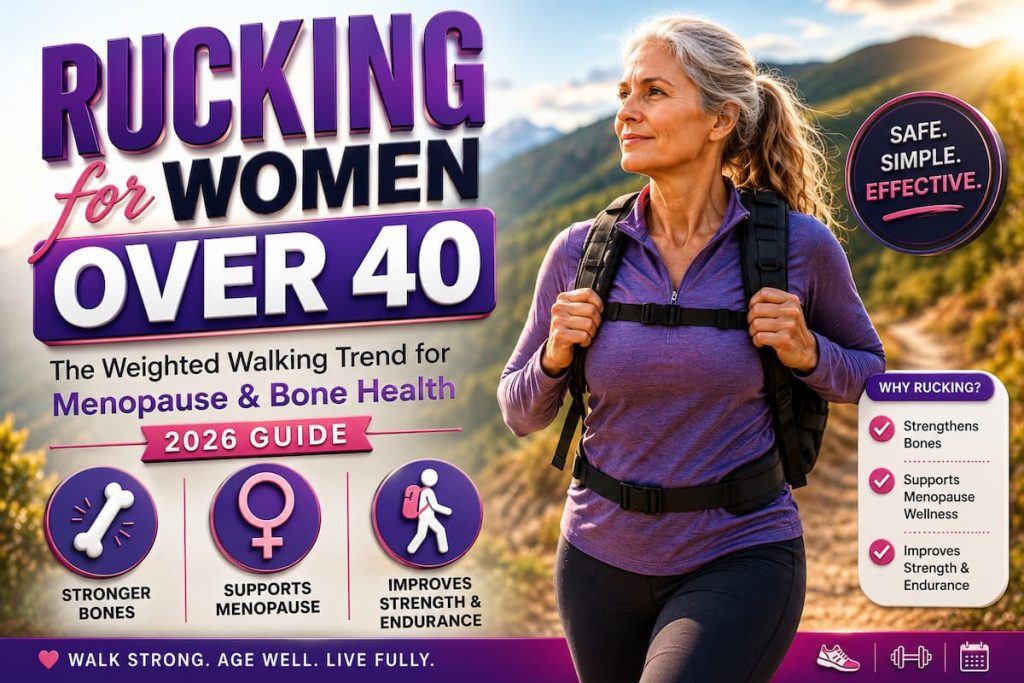
Rucking for women over 40 is showing up everywhere on fitness social media lately — women in their 40s and 50s strapping on a backpack before heading out for a walk. It looks almost too simple to matter. But rucking — walking with added weight on your back — is quietly becoming one of the most recommended forms of exercise for women navigating perimenopause and menopause, and there’s real physiology behind why.
This isn’t another 30-day challenge that fades by spring. It’s a low-impact way to hit two targets that become harder to reach after 40: bone density and lean muscle. Here’s what rucking actually does, why the timing matters for women in this age group, and how to start without overdoing it.
What Rucking Actually Is
Rucking is exactly what it sounds like — walking with a weighted backpack. The term comes from “rucksack,” and it was originally a military conditioning method, used to prepare soldiers to carry heavy loads over long distances. The civilian version keeps the basic idea but drops the boot-camp intensity.
According to the Cleveland Clinic, rucking can burn up to three times more calories than regular walking at the same pace, putting it closer to jogging in terms of energy expenditure — but without the joint impact that comes with running. That combination is exactly what makes it worth a second look for women over 40, many of whom are looking for something more effective than a casual walk but less punishing on the knees than high-impact cardio.
Why Rucking for Women Over 40 Matters
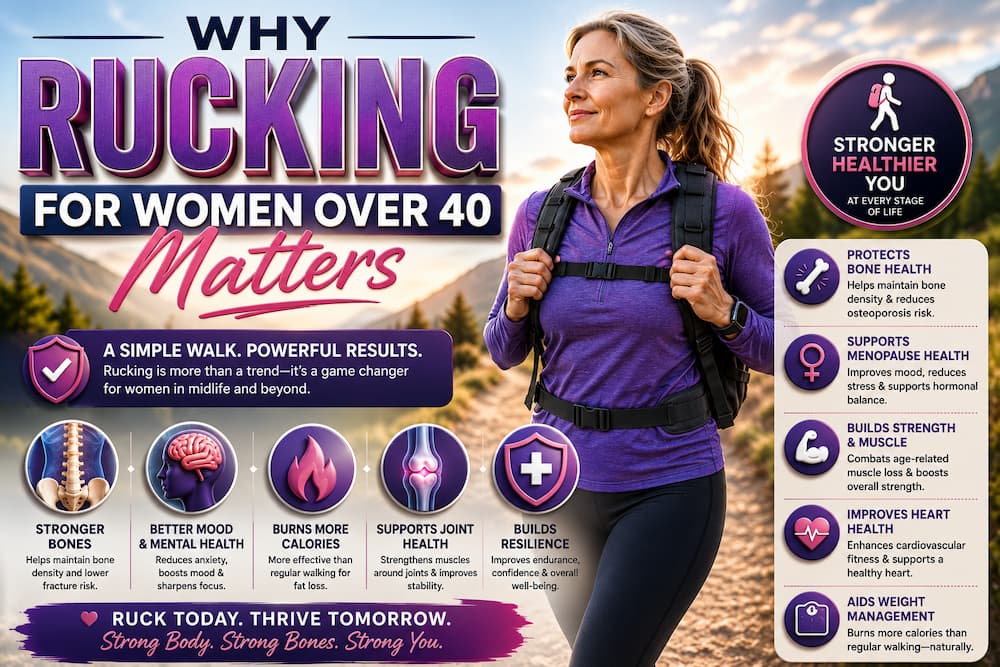
Estrogen does a lot of quiet work in the body, and bone maintenance is one of its jobs. Once estrogen levels start dropping in perimenopause, bone breakdown can outpace bone rebuilding, and that shift accelerates through menopause. This is a large part of why osteoporosis risk climbs sharply in women during and after this transition.
The research on exercise and bone health is fairly consistent on one point: weight-bearing movement is one of the few tools that meaningfully slows this process. A meta-analysis published in the National Library of Medicine reviewed dozens of exercise studies in postmenopausal women and found that both weight-bearing and resistance-based training produced measurable improvements in bone mineral density at the spine, hip, and femoral neck. Rucking sits at the intersection of both categories — it’s weight-bearing by nature, and the added external load gives it a resistance component that plain walking doesn’t have.
There’s a second piece to this. Muscle mass naturally declines with age, a process called sarcopenia, and it tends to speed up around menopause too. Carrying load while walking recruits the glutes, hamstrings, and core more than walking alone does, which gives you a strength-training stimulus without needing a gym membership or a complicated program. If you’re already tracking your protein intake to support muscle maintenance, pairing that with rucking two or three times a week is a practical combination — you can check your daily target with our Protein Intake Calculator.
There’s also a stress angle worth mentioning. Outdoor, rhythmic movement like rucking has a noticeable effect on cortisol, the stress hormone that tends to run higher during the hormonal shifts of menopause. If elevated cortisol is something you’re already trying to manage, it’s worth reading our guide on natural ways to lower cortisol levels, since rucking checks several of the same boxes recommended there.
How Much Weight to Start With
This is where most beginners get it wrong — either by grabbing a heavy pack because it feels like “more effort equals more results,” or by underloading so much that it’s just a walk with extra steps. For rucking for women over 40, the general guidance from rucking coaches and physical therapists is to start light and build slowly.
| Week | Load (% of bodyweight) | Distance | Frequency | Notes |
|---|---|---|---|---|
| 1–2 | 5% | 1–1.5 miles | 2x/week | Focus on posture, not speed |
| 3–4 | 7–8% | 1.5–2 miles | 2–3x/week | Add one extra session if it feels manageable |
| 5–6 | 10% | 2–2.5 miles | 3x/week | This is the standard beginner target |
| 7–8 | 10–12% | 2.5–3 miles | 3x/week | Increase distance before increasing weight |
| 9+ | Up to 15% | 3+ miles | 3–4x/week | Only progress if joints and back feel fine |
As a rough example, a 150-pound woman would start with about 7–8 pounds in week one and work up to roughly 15 pounds by week five or six. There’s no need to rush this — the bone and muscle benefits come from consistency over months, not from how heavy your pack is in week two.
Getting Started the Right Way
Rucking for women over 40 has enough beginner-friendly guidance now that you don’t have to figure this out alone.
Pick the right pack. You don’t need specialized rucking gear to begin. A sturdy backpack with a padded hip belt distributes weight better than one that hangs entirely off your shoulders. If you find you enjoy rucking after a few weeks, a purpose-built ruck plate carrier is a worthwhile upgrade — it sits closer to your spine and doesn’t shift around.
Load it correctly. Keep the weight high on your back, close to your shoulder blades, not sagging down near your lower back. Books, a sandbag, or dedicated ruck plates all work. Avoid anything that shifts loosely inside the bag, since that throws off your balance.
Watch your posture. Stand tall, keep your core braced, and resist the urge to lean forward to compensate for the load. Leaning forward is one of the most common causes of lower back strain in new ruckers.
Choose your terrain wisely at first. Flat, even ground is best while you’re still building a base. Trails and hills add difficulty, but save them for once you’re comfortable with the basic movement and load.
Give yourself rest days. Two to three sessions a week is plenty for most beginners. Rucking on consecutive days, especially at higher loads, increases the risk of shin or foot strain before your body has adapted.
If you already have a joint issue, osteoporosis diagnosis, or back condition, it’s worth checking with a doctor or physical therapist before adding load to your walks — this is generally true of any new resistance-based activity.
Common Mistakes to Avoid
- Loading too much too soon. Ten pounds might not feel like much on day one, but it changes your gait and joint loading more than people expect.
- Skipping supportive shoes. Rucking puts more force through your feet and ankles than walking. Trail runners or supportive walking shoes matter more here than they do for a regular stroll.
- Ignoring hydration and recovery. Because rucking burns more calories and puts more mechanical stress on the body, treating it like “just a walk” and skipping recovery basics is a common way people end up sidelined.
- Comparing pace to running. Rucking is meant to be walked, not jogged. Trying to move at running speed with a loaded pack significantly raises injury risk without adding meaningful benefit.
Frequently Asked Questions
Is rucking safe if I have low bone density or osteopenia?
Weight-bearing exercise is generally recommended for people with low bone density, but the appropriate starting load and progression should be discussed with your doctor first, especially if you’ve been diagnosed with osteoporosis.
How is rucking different from just wearing a weighted vest around the house?
The mechanism is similar — added load during weight-bearing movement — but rucking outdoors adds a walking-pace cardio element and typically involves more total distance and time under load than daily vest-wearing alone.
Can rucking help with menopause weight gain?
It can support it indirectly. Rucking burns more calories than walking and helps maintain muscle mass, which affects resting metabolic rate. It works best alongside adequate protein intake and overall activity, not as a standalone fix.
How soon will I notice a difference?
Most people notice improved endurance and comfort with the load within three to four weeks. Bone and muscle changes take longer to show up — typically several months of consistent training.
Do I need a special rucksack to get started?
No. A sturdy backpack with a hip belt works fine for the first several weeks. A dedicated rucking pack becomes worth the investment if you plan to stick with it long term or increase your load significantly.
Can I ruck every day?
It’s not recommended for beginners. Two to three sessions a week allows your joints, tendons, and muscles time to adapt to the added load.
Final Thoughts
Rucking for women over 40 isn’t flashy, and that’s part of why it works. It takes something women over 40 are often already doing — walking — and adds just enough resistance to turn it into a legitimate tool for protecting bone density, preserving muscle, and managing the metabolic shifts that come with menopause. It doesn’t require a gym, a class schedule, or complicated programming, just a backpack, some weight, and a willingness to start light.