
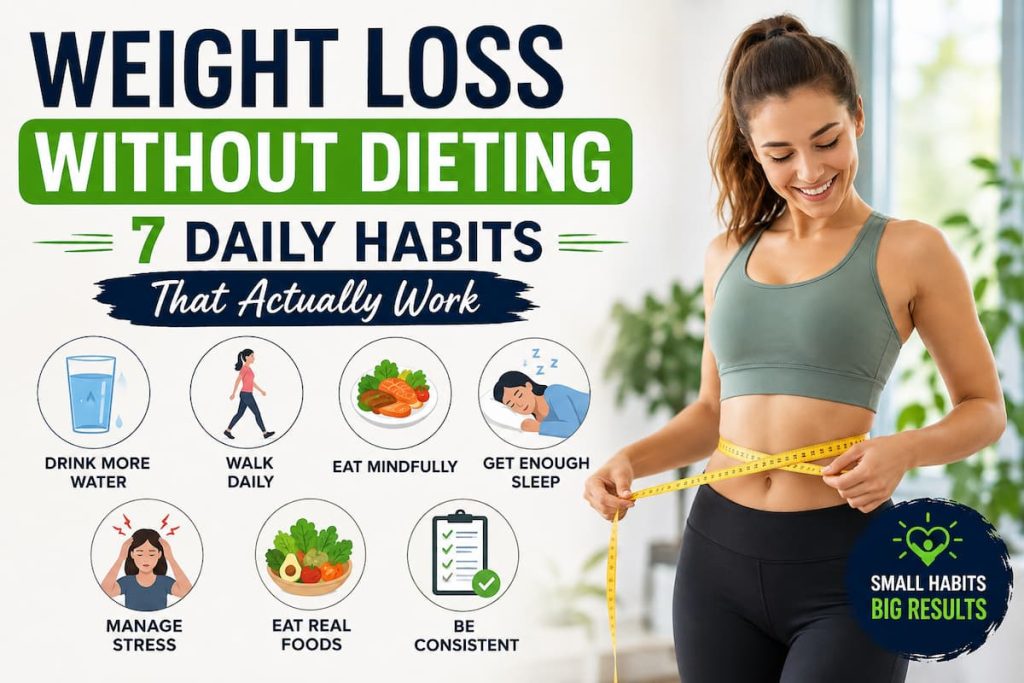
Ever started a diet on Monday and given up by Wednesday? You’re not alone. Most strict diets fail not because people lack willpower, but because the plans themselves are too hard to sustain. Counting every calorie, cutting out entire food groups, and constantly feeling hungry — it’s exhausting, and honestly, it’s not how the body was meant to work.
Here’s the good news: weight loss without dieting is not only possible, it’s often more effective in the long run. Instead of relying on restriction, you can lose fat naturally by adjusting a few daily habits. These changes are small enough to stick with, yet powerful enough to shift your metabolism, curb unnecessary cravings, and help you settle into a healthier body over time.
Before you start, it helps to know where you currently stand — you can check your BMI Calculator for a quick baseline.
Below are seven habits that make this approach work — no crash diets, no gym membership required.
1. Drink More Water Throughout the Day

Water is one of the most underrated tools for weight loss without dieting. Aiming for around 7–10 glasses a day keeps your body properly hydrated, supports digestion, and helps your metabolism run the way it should. It also plays a sneaky but important role in appetite control — thirst is often mistaken for hunger, which leads to eating when your body actually just needed fluids.
Try this: Keep a glass of water on your nightstand and drink it first thing when you wake up, before coffee or breakfast. It’s a small ritual that jumpstarts your system for the day. If you also deal with a heavy, bloated feeling after meals, check out our guide on how to reduce bloating naturally.
2. Walk Daily — No Gym Needed
Walking is one of the simplest tools for weight loss without dieting. You don’t need a treadmill or a monthly membership to become more active. A brisk 20–30 minute walk each day is enough to burn calories, strengthen your heart, and improve circulation. What makes walking especially effective is that it’s sustainable — you can do it on your lunch break, after dinner, or while running errands.
Over weeks and months, this simple habit adds up to real, measurable progress, without ever feeling like “exercise” in the intimidating sense. Prefer something gentler on your joints? Our roundup of low impact exercises for beginners is a great next step.
3. Eat Slowly and Mindfully
If you’re serious about weight loss without dieting, this habit matters more than most people realize. Fast eating is one of the biggest hidden causes of overeating. Your brain typically takes about 20 minutes to register fullness — so if you’re finishing meals in five, you’re likely eating past the point your body actually needed.
Try this: Put your phone away during meals, chew each bite thoroughly, and pause between bites. You’ll naturally eat less and enjoy your food more.
4. Prioritize Real Sleep
Sleep doesn’t just affect your energy levels — it directly influences the hormones that regulate hunger and fat storage. Skimping on sleep throws ghrelin and leptin (your hunger and fullness hormones) out of balance, which is why poor sleepers often crave more sugar and carbs the next day. Research published by the National Institutes of Health has consistently linked shorter sleep duration with elevated ghrelin, reduced leptin, and long-term weight gain.
Aim for a consistent 7–8 hours a night, and try to keep your sleep and wake times steady, even on weekends. Your body responds well to rhythm — and good sleep alone can make weight loss without dieting feel far less like a struggle.
5. Cut Back on Junk Food — Don’t Eliminate It
Total restriction almost always backfires. Telling yourself you can “never” have your favorite snack again usually leads to intense cravings and eventual binging. A more realistic approach is to make junk food occasional rather than off-limits entirely.
This shift — from restriction to moderation — is often what separates people who lose weight and keep it off from those who yo-yo between diets. Pairing this balance with more protein-rich foods also helps you stay fuller for longer, so cravings naturally lose some of their pull.
6. Manage Stress Before It Manages You
Chronic stress raises cortisol, a hormone linked to increased appetite and fat storage, particularly around the midsection. It’s also a major driver of emotional eating — reaching for snacks not because you’re hungry, but because you’re overwhelmed.
Simple daily practices like deep breathing for a few minutes, short walks outside, or even journaling can lower stress levels and, in turn, support weight loss without dieting indirectly but meaningfully.
7. Stay Active in Small Ways All Day
Not all movement has to be a scheduled workout. Taking the stairs instead of the elevator, standing up every hour if you have a desk job, or pacing while on phone calls — these small bursts of activity, known as NEAT (non-exercise activity thermogenesis), can burn a surprising number of extra calories over a day.
The goal isn’t to add more to your to-do list — it’s to reduce the amount of time your body spends completely still, which is what makes weight loss without dieting sustainable in the first place.
Final Thoughts
Weight loss without dieting isn’t a shortcut — it’s a more sustainable path. Instead of relying on willpower to survive a restrictive plan, you’re building habits your body and mind can actually maintain. Drink more water, move a little more, sleep well, eat with attention, and manage your stress — and the results will follow naturally.
Remember: consistency beats perfection. You don’t need to get every habit right every day. You just need to keep showing up.
Frequently Asked Questions
Is it really possible to lose weight without dieting?
Yes. Weight loss without dieting works by focusing on sustainable daily habits — hydration, sleep, movement, and mindful eating — instead of strict calorie counting or food restriction. These habits create a calorie deficit naturally, without the burnout that comes with crash diets.
How long does it take to see results without dieting?
Most people begin noticing small changes, like less bloating and more energy, within 2–3 weeks. Visible weight loss typically follows in 4–8 weeks, depending on consistency. Since this approach relies on habits rather than a strict plan, results tend to last longer once achieved.
Can I lose weight by just walking every day?
Walking alone can support weight loss, especially when combined with other habits like better sleep and mindful eating. A daily 20–30 minute walk burns calories and improves metabolic health, but pairing it with the other habits in this article gives faster, more consistent results.
Do I need to give up junk food completely?
No. Complete restriction often backfires and leads to binge eating. Treating junk food as an occasional treat rather than a daily habit is more sustainable and just as effective for long-term weight management.
Why does sleep affect weight loss?
Poor sleep disrupts ghrelin and leptin, the hormones that control hunger and fullness, which leads to increased appetite and cravings — especially for sugary and high-carb foods. Getting 7–8 hours of consistent sleep helps keep these hormones balanced.