
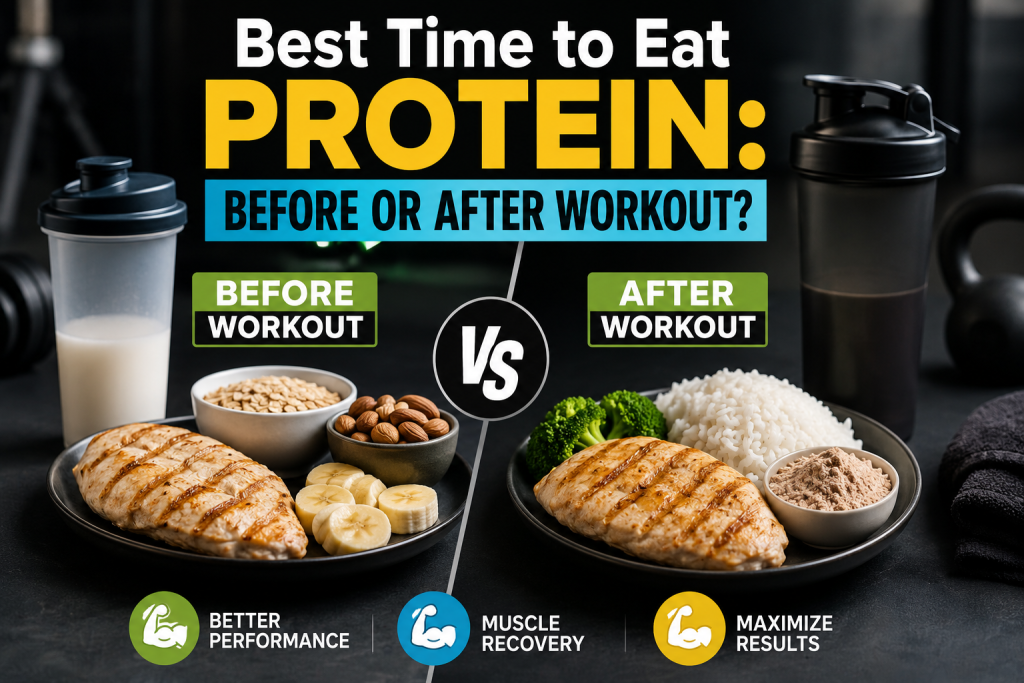
Wondering about the best time to eat protein — before your workout or right after? So you just bought a tub of whey protein, and now you’re standing in your kitchen asking yourself: “Do I drink this before my workout, or right after?” Honestly, I’ve had this exact same debate with myself more times than I’d like to admit.”
Here’s the good news — once you understand how your body actually uses protein, this whole thing stops feeling complicated.
Why Does Timing Even Matter?
When you lift weights or do any kind of resistance training, you’re literally creating tiny micro-tears in your muscle fibers. Sounds a bit scary, but that’s actually how muscle grows — your body repairs those tears and builds the muscle back thicker and stronger. Protein is the raw material your body uses to do that repair work.
So the real question isn’t whether protein matters (it obviously does) — it’s whether the timing of when you eat it changes your results.
Team Pre-Workout: Why the Best Time to Eat Protein Might Be Before Your Session

A lot of people swear by having protein before hitting the gym, and there’s some solid logic behind it:
- Your muscles have amino acids ready to go while you’re training, which can help limit muscle breakdown during the workout itself
- If you pair it with some carbs, you get a nice steady energy source instead of crashing halfway through your session
- You’re less likely to feel that annoying “hangry” feeling mid-set
A light snack like Greek yogurt with some berries, or a banana with a spoon of peanut butter, about an hour or two before training works great for most people.
Team Post-Workout: The Case For Eating Protein After
This is the one everyone talks about — the classic “protein shake right after the gym” advice. And yeah, it does have real benefits:
- Right after exercise, your muscles are especially good at soaking up nutrients
- It helps kickstart the repair process faster, which can mean less soreness the next day
- It supports something called muscle protein synthesis — basically your body’s “building crew” getting to work
For years, people believed you had a strict 30-minute “anabolic window” after training, and if you missed it, you’d lose all your gains. Turns out, that’s not really true (more on that below).
Quick Comparison Table
| Factor | Protein Before Workout | Protein After Workout |
|---|---|---|
| Reduces muscle breakdown during exercise | Yes | No (workout already done) |
| Boosts energy/performance | Yes, especially with carbs | No direct effect |
| Speeds up recovery | Moderate | Strong |
| Convenient timing | Needs planning ahead | Easier to grab right after |
| Impact on overall muscle growth | Similar (if daily total is met) | Similar (if daily total is met) |
So… Which One Actually Wins?
Honestly? Neither, and that surprises most people. According to a well-cited meta-analysis published in the Journal of the International Society of Sports Nutrition, the difference in muscle growth between eating protein right before versus right after a workout is minimal — as long as your total daily protein intake is on point.
That old “anabolic window” idea — the one where you had exactly 30 minutes post-workout to chug a shake or lose your gains — has been pretty thoroughly debunked by more recent research. Your muscles stay receptive to protein for several hours after training, not just half an hour.
What Actually Moves the Needle
If you want the short version, here’s what actually matters more than timing:
- Total daily protein intake — most active people should aim for somewhere around 1.6 to 2.2 grams per kilogram of body weight. Not sure where you stand? You can check your exact number using our Protein Calculator.
- Spreading it out — getting protein across 3–4 meals a day seems to work better for muscle repair than one giant serving at once
- Overall diet quality — protein doesn’t work in isolation. You still need enough carbs, healthy fats, and total calories to actually build muscle
- So, what’s the best time to eat protein — before or after your workout? Honestly, both work, as long as your total daily intake is on point.
A Simple Plan You Can Actually Stick To
Here’s what I’d genuinely recommend, without overthinking it:
- Eat a balanced meal with some protein 1–2 hours before training
- Have another protein-rich meal or snack within a couple of hours afterward
- Stop stressing about the clock, and focus on hitting your daily protein target consistently
If you’re looking for good protein sources to build your meals around, check out our guide on protein-rich foods for muscle building — it’s got some solid options that aren’t just chicken breast for the hundredth time.
Frequently Asked Questions
Do I really need to drink a protein shake within 30 minutes of finishing my workout?
No. That’s the old “anabolic window” myth. Your muscles remain receptive to protein for several hours post-exercise, so a shake within an hour or two works just fine.
Can I just eat all my protein in one big meal at night?
You could, but it’s not ideal. Spreading protein across the day (3–4 meals) tends to support muscle repair better than one large dose.
What if I work out on an empty stomach in the morning?
That’s fine too — just make sure you eat a solid protein-rich meal soon after. According to Healthline’s overview on fasted training, it doesn’t significantly harm muscle growth as long as your daily protein goal is met.
Is whey protein necessary, or can I get enough from food?
Whey is convenient, not mandatory. Chicken, eggs, fish, dairy, and legumes can easily cover your protein needs — whey just makes hitting your target easier if you’re short on time.
Do I really need to drink a protein shake within 30 minutes of finishing my workout?”
No. That’s the old “anabolic window” myth… Honestly, there’s no single best time to eat protein that works for everyone — consistency matters more than exact timing.