
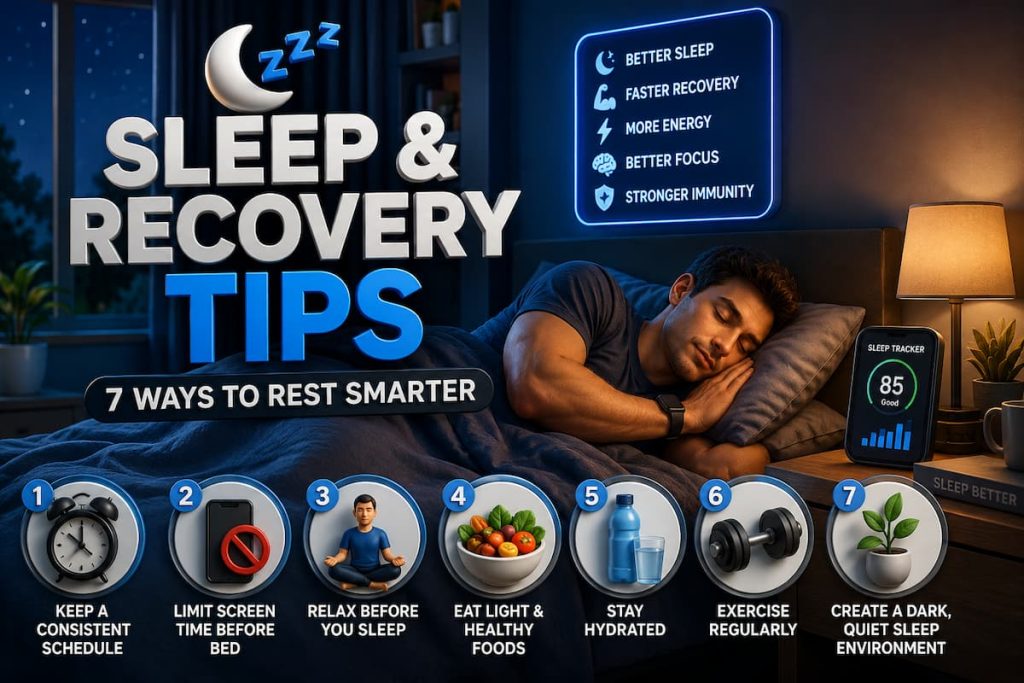
You can eat perfectly and train hard every day, but if sleep is an afterthought, you’re leaving most of your results on the table. Sleep isn’t downtime — it’s when your body actually does the repair work that exercise and nutrition only set up. That’s the whole idea behind good sleep and recovery tips: they’re not about sleeping “more,” they’re about sleeping in a way that actually lets your body catch up.
Here are seven habits that make a real, measurable difference — backed by research, not wellness-trend guesswork.
Why Sleep Is the Missing Piece of Recovery
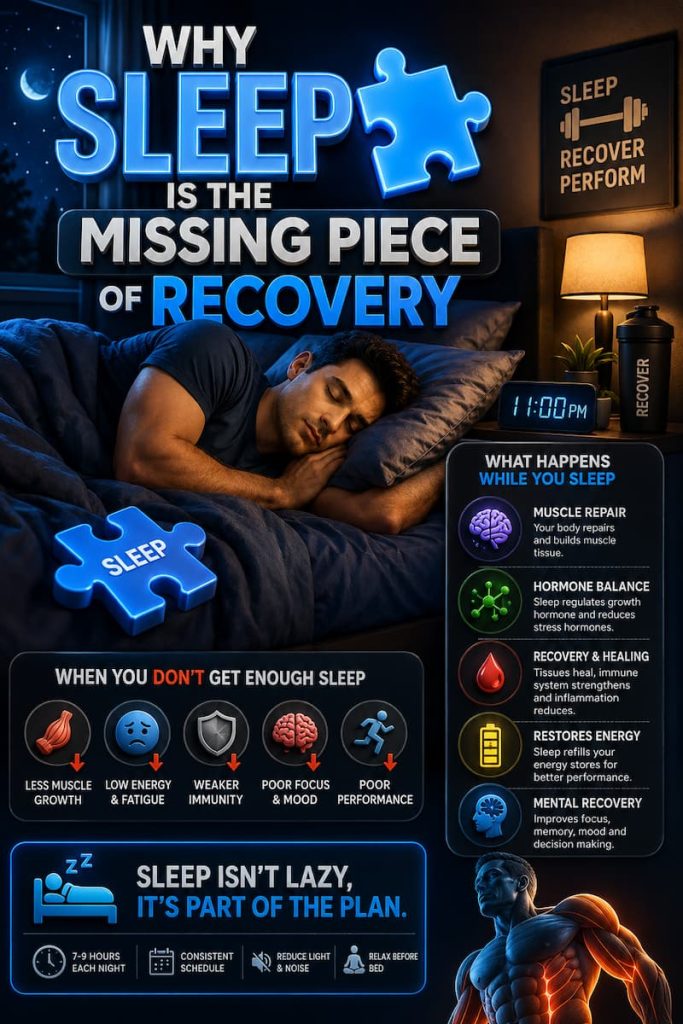
While you’re asleep, your body is anything but idle. Growth hormone floods your system, muscle tissue repairs itself, and your brain sorts through the day’s stress. Scientists at UC Berkeley recently mapped the exact brain circuit responsible for this process, confirming that growth hormone release is tightly linked to deep, non-REM sleep — and that disrupted or shortened deep sleep directly interferes with muscle repair, fat metabolism, and immune function. In other words, skipping sleep doesn’t just make you tired — it undercuts almost everything else you’re working toward.
1. Protect Your First 3–4 Hours of Sleep
Deep sleep is front-loaded into the early part of the night, which means the first few hours matter more than people realize for any real sleep and recovery tips to actually work. Staying up late scrolling or bingeing a show doesn’t just cost you total hours — it eats into the exact window where your body does its heaviest repair work.
Try this: Set a consistent bedtime rather than a consistent wake time. Waking up at the same hour every day matters too, and it’s a habit that pairs well with a structured morning routine — the two work together more than most people expect.
2. Treat 7–9 Hours as Non-Negotiable
This range shows up in study after study for a reason. One well-known trial found that just one week of sleep restricted to a few hours a night was enough to noticeably reduce insulin sensitivity in otherwise healthy men — a change that normally takes years of poor lifestyle habits to produce. Sleep debt adds up faster than most people assume.
3. Don’t Trade Sleep for “Extra” Workout Time
If you’re cutting sleep short to fit in an early workout, you might be working against yourself. A well-cited study on dieting adults found that those who slept only 5.5 hours a night, compared to 8.5 hours, lost significantly less body fat and more muscle mass on the exact same reduced-calorie diet. Recovery and results depend on sleep as much as they depend on training.
4. Fuel Recovery With Enough Protein
Sleep does the repair work, but it needs raw materials to work with. Since growth hormone and muscle repair peak during deep sleep, having enough protein circulating in your system supports that process instead of leaving it running on empty. If you’re not sure your intake is where it should be, this guide to protein-rich foods is a good place to start, even if your main goal is recovery rather than muscle gain.
5. Cool, Dark, and Quiet Beats Any Sleep Gadget
Before reaching for supplements or expensive sleep tech, get the basics right — most sleep and recovery tips you’ll find online skip straight past this, but it matters more than any gadget. A cool room, blackout curtains or an eye mask, and minimal noise do more for deep sleep than most people give them credit for. Screens right before bed are a common culprit too — the light and mental stimulation both work against your body’s natural wind-down process.
6. Watch Alcohol and Caffeine Timing
Caffeine has a longer half-life than most people think, which is why an afternoon coffee can still be affecting you at midnight. Alcohol is trickier — it might help you fall asleep faster, but it fragments deep sleep later in the night, which is exactly the stage you’re trying to protect. Cutting caffeine 8+ hours before bed and keeping alcohol minimal (or paired with food) makes a noticeable difference for most people.
7. Give Recovery Days the Same Respect as Training Days
Recovery isn’t just about sleep at night — it’s also about not treating every single day like a training day, which is one of the simpler sleep and recovery tips people tend to overlook. Muscles repair between sessions, not during them, and skipping rest days regularly can quietly undercut the very sleep-driven repair process you’re trying to protect.
Quick Reference: Sleep Habit vs. What It Protects
| Habit | What It Protects |
|---|---|
| Consistent bedtime | Deep sleep window (first 3–4 hours) |
| 7–9 hours nightly | Insulin sensitivity, hormone balance |
| Not cutting sleep for workouts | Fat loss ratio during dieting |
| Adequate protein intake | Muscle repair materials |
| Cool, dark, quiet room | Sleep depth and continuity |
| Caffeine/alcohol timing | Uninterrupted deep sleep stages |
| Rest days | Overall recovery capacity |
Frequently Asked Questions
What’s the difference between sleep and recovery?
Sleep is one major component of recovery, but recovery also includes things like rest days, nutrition, and stress management. Sleep tends to have the biggest single impact, since so much repair work is concentrated into those hours.
How many hours of sleep do I actually need for recovery?
Most research points to 7–9 hours for adults. Athletes or people in heavy training blocks sometimes need slightly more, since physical repair demands are higher.
Can I “catch up” on sleep over the weekend?
Partially, but not fully. Recovery sleep can ease some symptoms of sleep debt, but research suggests some metabolic effects, like changes in fat storage, don’t fully reverse with just a couple of extra nights.
Does napping count toward recovery?
Short naps (20–30 minutes) can help with alertness and mild recovery, but they don’t replace the deep, uninterrupted sleep cycles that happen during a full night’s sleep.
Is it bad to work out on very little sleep?
It’s not dangerous for most healthy people occasionally, but consistently training on insufficient sleep increases injury risk and blunts the results you’re working for, since the repair process is compromised.
Final Thoughts
Good sleep and recovery tips aren’t complicated — they’re just consistently ignored. Protecting your early sleep hours, hitting 7–9 hours regularly, fueling recovery with enough protein, and respecting rest days will do more for your energy and results than almost any other single change.
You don’t need perfect sleep every night. You need it to stop being the thing you sacrifice first.