
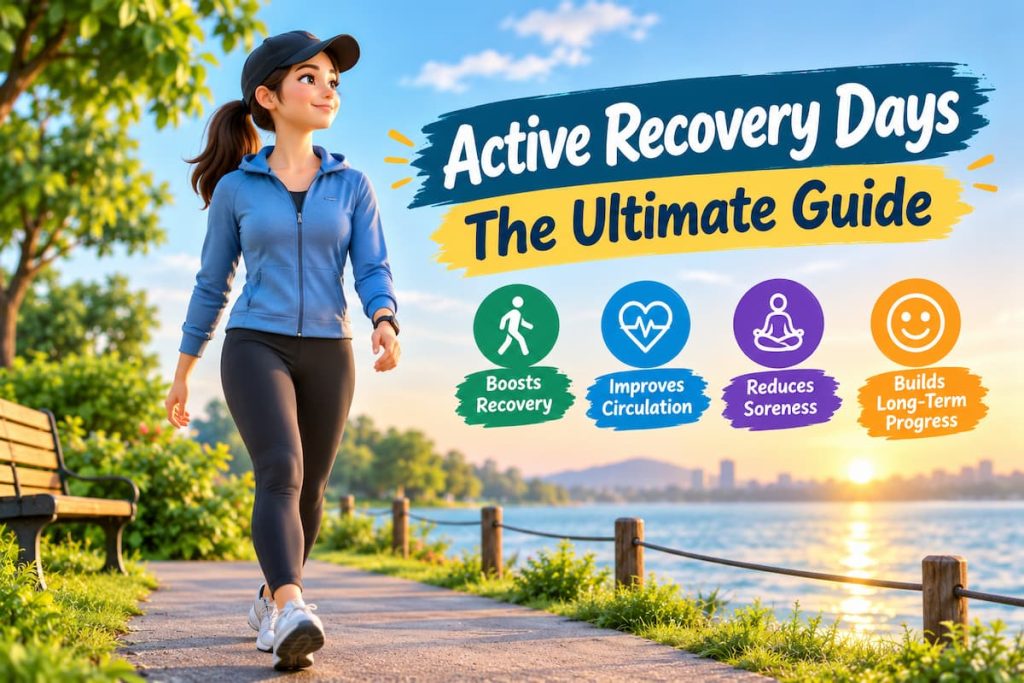
You trained hard yesterday. Active recovery days are a smart way to spend rest days when your legs feel heavy, your shoulders are tight, and the schedule says “rest day.” So what You trained hard yesterday. Active recovery days are a smart way to spend rest days when your legs feel heavy, your shoulders are tight, and the schedule says “rest day.” So what should you do: lie on the couch all day, or keep moving a little?
The honest answer is that it depends, and that is exactly why active recovery has become such a popular topic in 2026. Instead of treating rest days as days of doing nothing, many coaches now suggest light, easy movement that helps your body bounce back while you stay in a healthy routine.
In this guide, you will learn what active recovery is, how it differs from a full rest day, who benefits most, six simple activities, and a 25-minute routine you can follow at home. You will also learn when active recovery is not a good idea.
What Is Active Recovery?
Active recovery means doing low-intensity movement on your rest days, or right after a hard workout, instead of staying completely inactive. According to Cleveland Clinic, any low-impact exercise done between sets, after a workout, or on rest days falls under the umbrella of active recovery.
The key word is easy. If you finish your session out of breath, sweaty, or sore, it was a workout, not recovery.
Active Recovery vs. Rest Day: What Is the Difference?
| Feature | Active Recovery | Complete Rest Day |
|---|---|---|
| Activity level | Light movement | Very little movement |
| Intensity | Easy, conversational pace | None |
| Duration | 20-45 minutes | Not applicable |
| Best for | Mild soreness, stiffness, staying consistent | Injury, illness, heavy fatigue |
Neither option is “better” in every situation. Experts at UCLA Health recommend taking at least one day off from your regular workout routine each week, and say a rest day after a particularly long or intense workout can be especially helpful. Active recovery simply gives you a gentler way to spend that time when your body feels fine.
Active recovery days work best when your body feels fine but a little stiff, while a complete rest day is better when you are injured or very tired.
Why Active Recovery May Help
Light movement increases blood flow, which is part of how your body delivers nutrients to tired muscles. Health sources like Healthline note that studies suggest active recovery may help clear lactate from the body and reduce the feeling of fatigue.
Here are the main benefits people report:
- Less stiffness and soreness. Gentle movement often feels better than sitting still after a tough session.
- Better mobility. Easy stretching and joint movement can improve your range of motion over time.
- Mental reset. A calm walk or stretch session can lower stress and improve mood.
- Stronger habits. Staying active every day makes it easier to remain consistent.
An exercise physiologist at the Hospital for Special Surgery (HSS) explains that active recovery days work best when placed after your most intense workouts of the week, and that you should also look at the bigger picture, balancing heavy weeks with lighter ones. You can read more in this HSS summary.
To be fair, research on active recovery is still mixed. Some people feel a clear difference, others feel little. The best approach is to try it for two or three weeks and notice how your body responds.
Who Should Use Active Recovery Days?
Active recovery days are a good fit if you:
- Train 3-5 days per week and feel mild muscle soreness
- Sit at a desk for most of the day and feel stiff
- Want to stay consistent without overtraining
- Are following a program such as our full body dumbbell workout at home and need a smart plan for the days in between
6 Easy Active Recovery Activities
1. Easy Walking
Walking is one of the simplest and most beginner-friendly options. Aim for 20-40 minutes at a pace where you can still talk comfortably.
2. Zone 2 Cardio (Very Light Version)
If you already know your heart rate zones, a short, easy session works well. Keep it truly relaxed. Our guide to Zone 2 cardio for fat loss explains how to find your pace, but on a recovery day, stay at the lower end of that range.
3. Gentle Yoga or Stretching
Slow stretching and basic yoga flows improve flexibility and help you relax. Hold each stretch for 20-30 seconds and never push into pain.
4. Mobility Drills
Hip circles, cat-cow, shoulder rolls, and ankle circles take only a few minutes and loosen up joints that get tight from training or sitting.
5. Easy Cycling or Swimming
Both are low-impact and take pressure off your joints. Keep the effort light, like a leisurely ride rather than a race.
6. Foam Rolling
Rolling slowly over tight muscles may reduce the feeling of tightness. Spend about 30-60 seconds per area and avoid rolling directly over joints or sharp pain.
A 25-Minute Active Recovery Routine (No Equipment)
Follow this simple routine on your next rest day:
| Time | Activity |
|---|---|
| 0-10 min | Easy walk (indoors or outdoors) |
| 10-15 min | Mobility drills: hip circles, shoulder rolls, cat-cow |
| 15-22 min | Full-body stretching (hamstrings, quads, chest, back) |
| 22-25 min | Deep breathing: inhale 4 seconds, exhale 6 seconds |
Rule of thumb: if you cannot hold a normal conversation, slow down.
How to Schedule Active Recovery Days in Your Week
Here is a sample weekly plan for a beginner:
- Monday: Strength training
- Tuesday: Active recovery (walk + stretching)
- Wednesday: Strength training
- Thursday: Active recovery or complete rest
- Friday: Strength training or a challenge-style session
- Saturday: Active recovery (cycling or yoga)
- Sunday: Complete rest
If you are doing high-volume programs, such as the 100 kettlebell swings every day for 30 days challenge, pay extra attention to your lower back, hamstrings, and grip. Add mobility and easy walking to your routine, and take a full rest day if you feel unusually sore or tired.
When You Should Skip Active Recovery
Active recovery is not right for everyone, every time. Choose a full rest day if you:
- Have sharp or sudden pain, swelling, or a suspected injury
- Feel sick, feverish, or very dizzy
- Have been training hard for weeks and feel constantly exhausted
- Sleep poorly for several nights in a row
Cleveland Clinic also points out that there are moments when true rest becomes more important than active recovery. If pain lasts more than a few days or keeps getting worse, speak with a doctor or physiotherapist before returning to training.
Simple Habits That Support Recovery
Active recovery days work best alongside the basics:
- Sleep: Aim for 7-9 hours per night.
- Protein: Spread protein across your meals to support muscle repair. See our guide on how many grams of protein per day for muscle growth.
- Hydration: Drink water throughout the day, especially after sweating.
- Stress management: Short walks, breathing exercises, and screen-free time help.
Frequently Asked Questions
Can I do active recovery days every week?
Yes. Light walking and stretching can be done daily for most healthy people. However, you should still schedule at least one lower-activity day per week and listen to your body.
Is active recovery better than a rest day?
Not always. It can feel better when you have mild soreness, but a full rest day is better when you are injured, sick, or truly exhausted.
How long should active recovery last?
Most people do well with 20-45 minutes of easy movement.
Does active recovery burn fat?
It burns some calories, but it is not designed for fat loss. Its main job is to support recovery and consistency.
Can beginners do active recovery?
Yes. Walking and gentle stretching are ideal starting points.
Final Thoughts
Rest days do not have to mean doing nothing, and they do not have to mean pushing harder either. A short walk, some easy stretching, and a good night’s sleep can help you feel better and stay consistent. Start with one of these active recovery days this week, keep it truly easy, and see how your body responds.
Medical disclaimer: This article is for educational purposes only and is not a substitute for professional medical advice. Consult a qualified healthcare provider before starting a new exercise program, especially if you have an injury or medical condition..