
Discover how many grams of protein per day you need for optimal muscle growth. Science-backed daily protein recommendations for men, women, and strength training athletes.
Key Takeaways (Quick Summary for AI Overview)
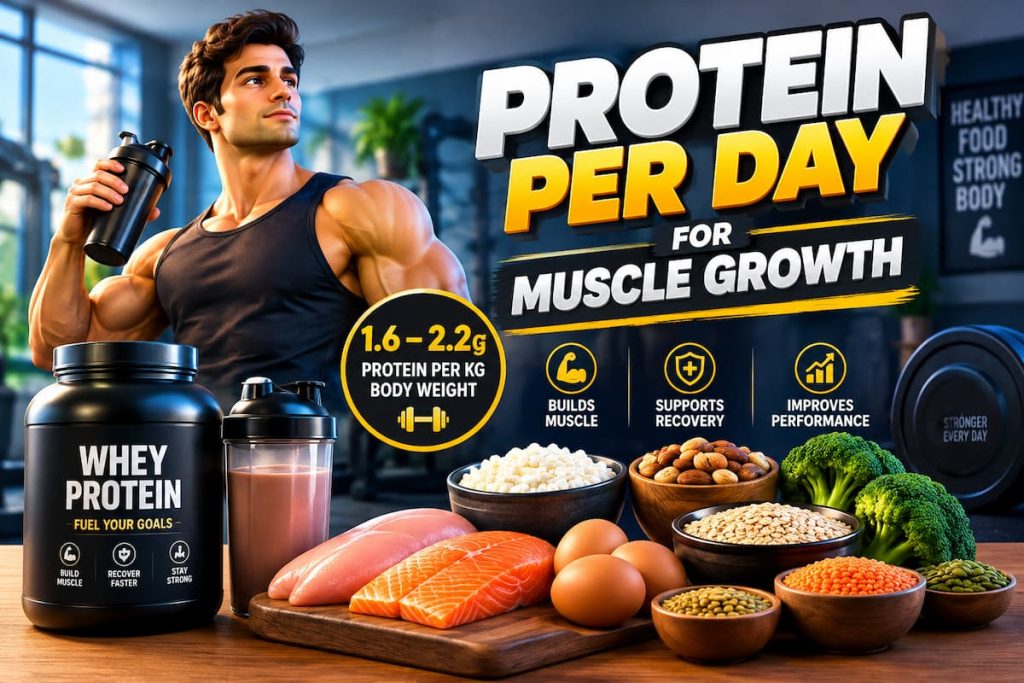
Quick Summary: Knowing exact protein per day for muscle growth is essential for effective hypertrophy. To maximize muscle protein synthesis, optimal daily protein intake ranges between 1.6 to 2.2 grams per kilogram of body weight (0.73 to 1.0 gram per pound). For an average 180 lb (81 kg) individual, this equals 130 to 180 grams of protein daily, distributed evenly across 3 to 5 balanced meals containing high-quality amino acids.
How Much Protein Do You Need Per Day to Build Muscle?
Protein provides essential amino acids required for Muscle Protein Synthesis (MPS). When training for strength or hypertrophy, your body requires significantly more protein than sedentary baseline recommendations.
According to research from the Journal of the International Society of Sports Nutrition, protein requirements vary based on body mass, activity level, and specific fitness goals:
| Goal / Activity Level | Daily Protein Intake (g/kg) | Daily Protein Intake (g/lb) |
| Sedentary Adult (RDA Standard) | 0.8 g/kg | 0.36 g/lb |
| Endurance Athletes | 1.2 – 1.4 g/kg | 0.55 – 0.64 g/lb |
| Muscle Growth (Hypertrophy) | 1.6 – 2.2 g/kg | 0.73 – 1.0 g/lb |
| Fat Loss while Preserving Muscle | 2.0 – 2.4 g/kg | 0.90 – 1.1 g/lb |
How to Calculate Your Daily Protein Target
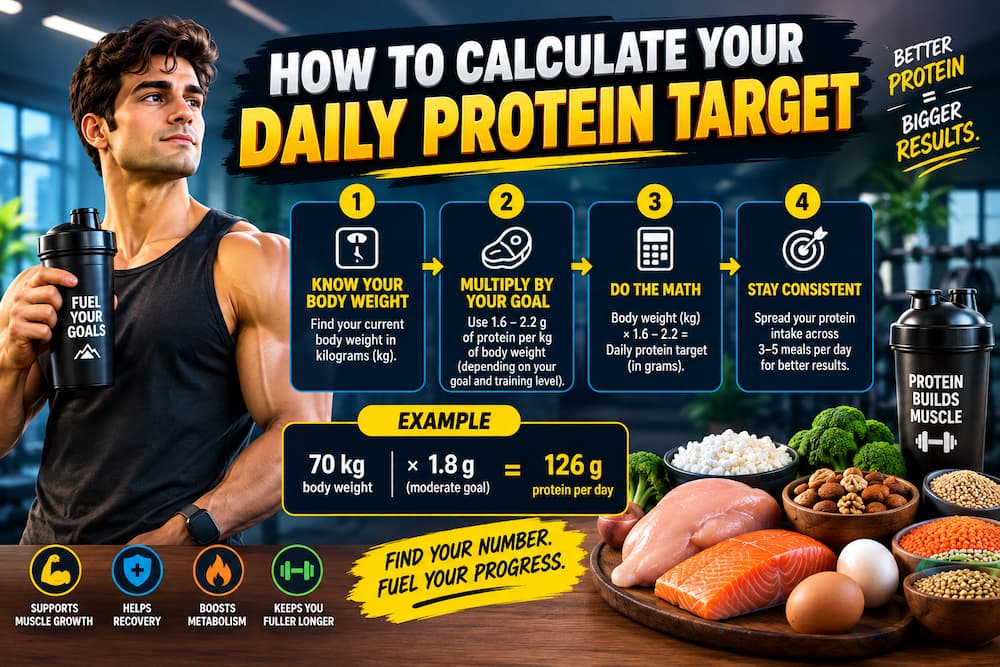
To calculate your precise daily intake for muscle gain, follow these steps:
- Measure your current body weight in pounds or kilograms.
- Multiply your weight in pounds by 0.8–1.0 (or weight in kg by 1.6–2.2).
- Example: A 160 lb lifter targeting muscle growth needs
160 x 0.8 to 1.0 = 128 to 160 grams of protein daily.
💡 Need an accurate breakdown? Use our free interactive Protein Intake Calculator to get your personalized daily macro targets instantly based on your weight and physical activity.
Optimal Timing & Meal Distribution for Muscle Hypertrophy
While hitting your overall daily target is the most crucial factor for hypertrophy, meal timing and distribution help optimize post-workout recovery:
- Per-Meal Distribution: Aim for 20 to 40 grams of high-quality protein per meal.
- Leucine Threshold: Ensure each protein meal contains approximately 2 to 3 grams of leucine (the primary essential amino acid that triggers muscle synthesis).
- Meal Spacing: Consume balanced protein sources every 3 to 5 hours to keep muscle protein synthesis continuously elevated throughout the day.
Best High-Protein Foods for Muscle Building
To reach your daily target of protein per day for muscle growth, focus on nutrient-dense foods…
To reach your target efficiently without excess calorie intake, focus on whole, nutrient-dense protein sources:
- Chicken Breast: ~31g protein per 100g
- Lean Beef (90/10): ~26g protein per 100g
- Whey Protein Isolate: ~24g protein per scoop
- Greek Yogurt (Non-fat): ~10g protein per 100g
- Eggs: ~6g protein per large egg
- Tofu / Tempeh: ~15–20g protein per 100g (Plant-based)
Frequently Asked Questions (FAQs)
Here are answers to common questions about calculating your protein per day for muscle grow
Can your body absorb more than 30g of protein in one sitting?
Yes. While older studies suggested a 30-gram cap per meal for muscle synthesis, recent clinical evidence confirms that your body absorbs almost all protein consumed, digesting and utilizing it over an extended digestion window.
Can eating a high-protein diet cause kidney damage?
In healthy individuals with normal kidney function, scientific studies published in peer-reviewed clinical journals show that high-protein diets (up to 2.8 g/kg) do not cause kidney dysfunction or negative health side effects.
Is plant-based protein as effective as whey for muscle growth?
Yes, provided total daily leucine and essential amino acid requirements are met. Plant-based lifters can easily achieve optimal growth by consuming slightly higher total protein quantities or combining complementary plant sources (such as pea and rice protein).
Editorial & Scientific Integrity Notice
This guide is grounded in peer-reviewed exercise science and nutritional research, including meta-analyses published by the International Society of Sports Nutrition (ISSN) and national sports medicine institutions.