
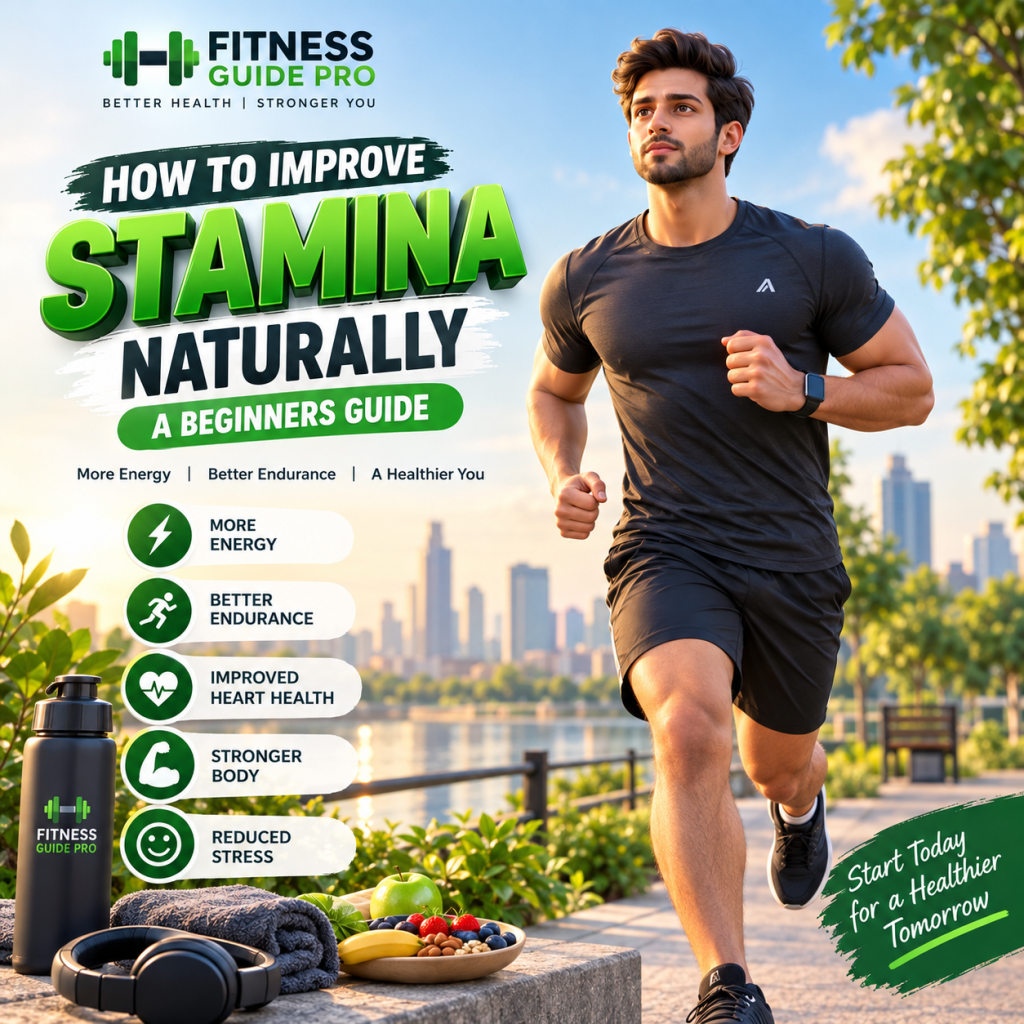
If you often feel tired during exercise or daily activities, improving your stamina can make a big difference. Good stamina helps you stay active for longer, recover better, and feel more energetic throughout the day.
The good news is that you don’t need extreme workouts to improve your stamina. With regular exercise, proper nutrition, enough sleep, hydration, and consistency, beginners can gradually build better endurance.
In this beginner-friendly guide, we’ll discuss simple and natural ways to improve stamina safely and effectively.
What Is Stamina?
Stamina is the ability to maintain physical or mental activity for an extended period without becoming excessively tired.
Good stamina can help you:
- Exercise for longer
- Walk or run more comfortably
- Perform daily activities with more energy
- Recover faster after physical activity
- Maintain an active lifestyle
If you are just starting your fitness journey, don’t worry about doing intense workouts immediately. Start slowly and increase your activity over time.
1. Start With Regular Cardio Exercise
One of the best ways to improve stamina naturally is through regular cardiovascular exercise.
Beginners can start with simple activities such as:
- Brisk walking
- Jogging
- Cycling
- Swimming
- Jumping rope
Try to stay active for around 20–30 minutes at a comfortable intensity.
As your fitness improves, you can gradually increase the duration or intensity of your workouts. The key is consistency.
2. Increase Workout Intensity Gradually
If you are a beginner, don’t try to do too much too quickly.
For example, if you normally walk for 15 minutes, don’t suddenly try to run for an hour. Your body needs time to adapt.
A simple approach is to increase your workout duration or intensity gradually. You could add a few extra minutes to your walking routine every week.
This can help your body become more efficient without putting unnecessary stress on it.
3. Eat a Balanced Diet
Your body needs fuel to perform physical activity. Instead of depending on processed foods and sugary drinks, focus on eating a balanced diet.
Good choices include:
- Fruits and vegetables
- Whole grains
- Eggs
- Lean meat or fish
- Beans and lentils
- Nuts and seeds
- Healthy sources of carbohydrates
- Protein-rich foods
Carbohydrates can provide energy for exercise, while protein supports muscle recovery and maintenance.
For more fitness and nutrition tips, check out our Fitness and Health sections.
4. Stay Hydrated
Dehydration can make you feel tired and may negatively affect your physical performance.
Make sure you drink enough water throughout the day, especially when exercising or when the weather is hot.
You don’t always need sports drinks or sugary beverages. For most normal workouts, water is a simple and effective choice.
Try to drink water regularly rather than waiting until you feel extremely thirsty.
5. Get Enough Sleep
Exercise and nutrition are important, but recovery is equally important.
Most adults need around 7–9 hours of sleep each night. Poor sleep can leave you feeling tired and can make workouts feel more difficult.
Try to maintain a consistent sleep schedule and create a relaxing environment before bedtime.
Getting enough quality sleep allows your body to recover and prepare for the next day’s activities.
6. Try Interval Training
Once you have developed a basic fitness level, you can add simple intervals to your workouts.
For example:
Walk for 2 minutes → Jog for 1 minute → Repeat
You can adjust the timing according to your fitness level.
Interval training allows you to alternate between easier and harder periods of activity. Beginners should start with short intervals and avoid pushing themselves beyond their current fitness level.
7. Don’t Ignore Strength Training
Cardio isn’t the only way to improve physical endurance. Strength training can help you build stronger muscles, which may make everyday activities and exercise easier.
Beginners can start with simple bodyweight exercises such as:
- Squats
- Lunges
- Push-ups
- Glute bridges
- Planks
Start with a manageable number of repetitions and focus on proper form.
If you want more beginner-friendly workout ideas, visit our Fitness section.
8. Give Your Body Time to Recover
Training every day at high intensity isn’t necessary for improving stamina.
Your body needs recovery time after exercise. Include rest days or easier workout days in your routine.
If you experience unusual pain, extreme fatigue, dizziness, or shortness of breath, stop exercising and consider speaking with a healthcare professional.
9. Avoid Too Much Sugar and Processed Food
Eating large amounts of highly processed foods and sugary drinks may make it harder to maintain a healthy diet.
Instead, try to choose more whole and minimally processed foods.
Simple meals containing protein, vegetables, fruits, whole grains, and healthy fats can provide your body with useful nutrients and steady energy.
10. Stay Consistent
Improving stamina doesn’t happen overnight.
You may not notice a major difference after just a few workouts. However, regular activity over several weeks can gradually improve your fitness.
Focus on small improvements instead of trying to become extremely fit in a short period.
Consistency is more important than perfection.
A Simple Beginner Stamina Routine
Here is an easy weekly routine for beginners:
| Day | Activity |
|---|---|
| Monday | 20–30 minutes brisk walking |
| Tuesday | Light strength training |
| Wednesday | Rest or easy walking |
| Thursday | 20–30 minutes walking with short jogging intervals |
| Friday | Light strength training |
| Saturday | Cycling, swimming, or another enjoyable cardio activity |
| Sunday | Rest |
You can adjust this routine according to your fitness level, schedule, and personal goals.
Frequently Asked Questions
How long does it take to improve stamina?
It depends on your current fitness level, exercise routine, sleep, diet, and consistency. Many beginners may notice gradual improvements after several weeks of regular activity.
Can walking improve stamina?
Yes. Brisk walking is an excellent starting point for beginners. As your fitness improves, you can gradually increase your walking speed, distance, or duration.
What should I eat to improve stamina?
A balanced diet containing carbohydrates, protein, healthy fats, fruits, and vegetables can support energy levels and overall fitness.
Does drinking water improve stamina?
Staying properly hydrated helps your body function normally during physical activity. Drink water regularly, particularly before and after exercise.
Can beginners do interval training?
Yes, but beginners should start with short and comfortable intervals. Gradually increase the duration as your fitness improves.
Final Thoughts
Improving stamina naturally is possible with simple daily habits. You don’t need complicated workouts or expensive supplements to get started.
Focus on regular cardio exercise, balanced nutrition, proper hydration, enough sleep, strength training, recovery, and consistency.
Start with small steps and gradually challenge yourself as your fitness improves.
Remember: the goal isn’t to do everything at once. The goal is to keep improving, one day at a time.